The Fate of Jacob and Taylor: A Phantom Liberty Crossroads
V's encounter with Jacob and Taylor in Phantom Liberty's Lucretia My Reflection forces a brutal moral choice: kill them or negotiate a tense standoff.
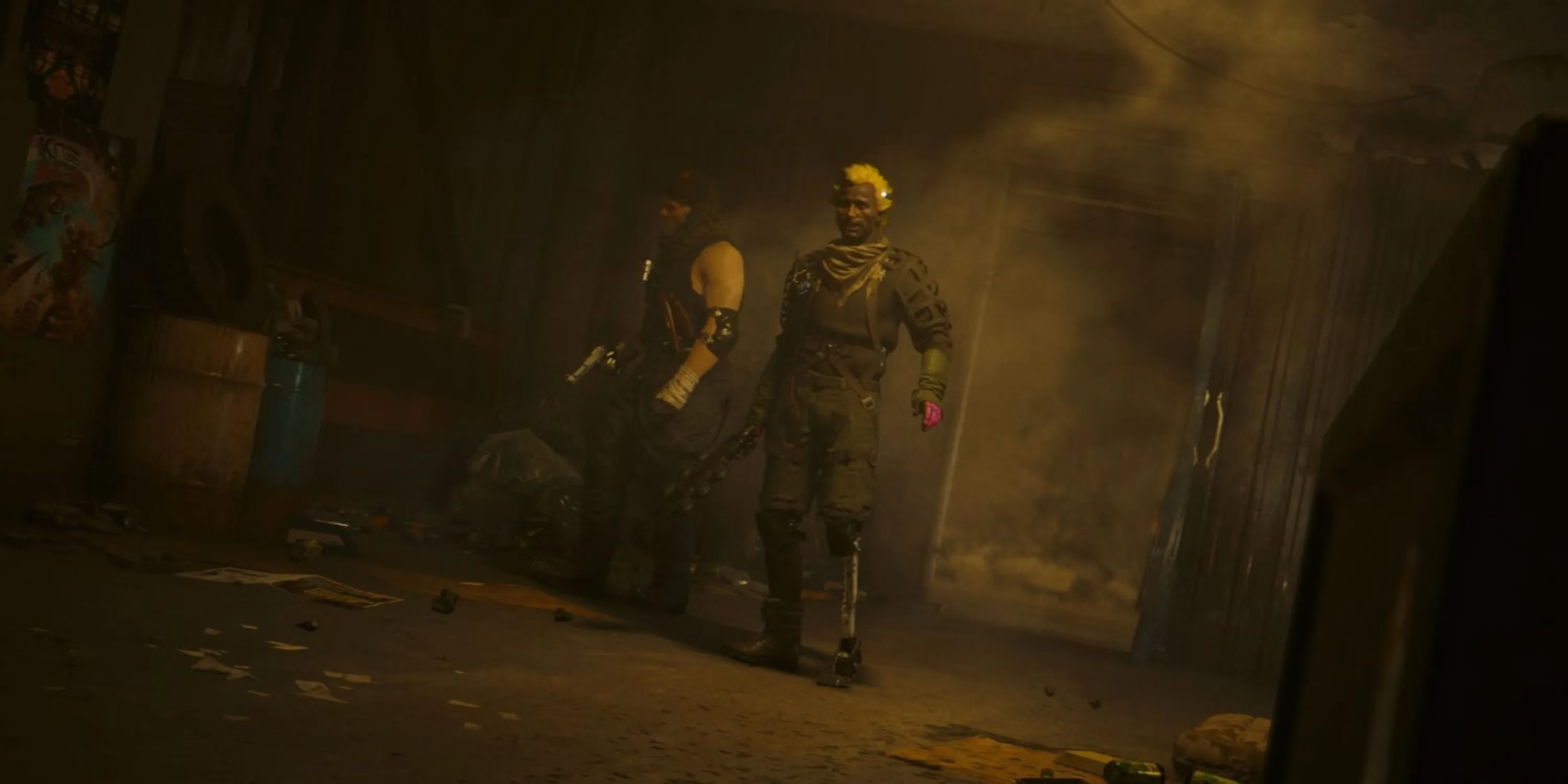
In the shadow-soaked streets of Dogtown, every decision carries the weight of a loaded gun. Since its launch in 2023, Cyberpunk 2077: Phantom Liberty has confronted V with a series of brutal choices, but few are as intimate and morally disorienting as the encounter with Jacob and Taylor during the main mission Lucretia My Reflection. The scene unfolds like a half-remembered dream where two innocent figures wander into a lion’s den, unaware that their next breath depends entirely on a stranger’s whim. This moment is not merely a binary kill-or-spare checkpoint; it is a mirror held up to the player’s own circuitry of trust, paranoia, and consequence.
The situation materializes early in the mission. V and NUSA President Rosalind Myers, fresh from a crash landing that shattered all pretense of safety, take refuge in a derelict apartment on the eighth floor of a decaying Dogtown high-rise. As they share a tense drink, the room’s stillness is cracked open by the arrival of two scavengers looking for shelter of their own. Myers, her survival instinct sharp as a monomolecular blade, immediately whispers the cold calculus of elimination. In her world, Jacob and Taylor are not people; they are loose threads that could unspool into disaster if Hansen’s soldiers catch wind of the hideout. V is handed a moral compass already spinning wildly.
What follows is a narrative tightrope strung over a pit of panic. The game presents a Quick-Time Event prompt: stay hidden and let the President resolve the “problem” with a burst of gunfire, or leap into the open and attempt negotiation. The decision feels like trying to catch two snowflakes in a hurricane—each flake unique, yet destined to melt into the same wet pavement. If the timer runs out, Myers guns them down without hesitation, her pragmatism a blunt instrument that leaves only two limp bodies and a meager pile of eddies. Alternatively, V can choose to draw a weapon mid-conversation, or provoke the intruders until they attack, resulting in the same crimson outcome. The choice to kill offers no hidden reward, no game-changing loot; it simply wraps the player in a shroud of unease. As their bodies are fed into the garbage chute outside, Myers remarks that any further visitors will join them, a statement that turns the chute into a hungry mouth waiting to be fed.
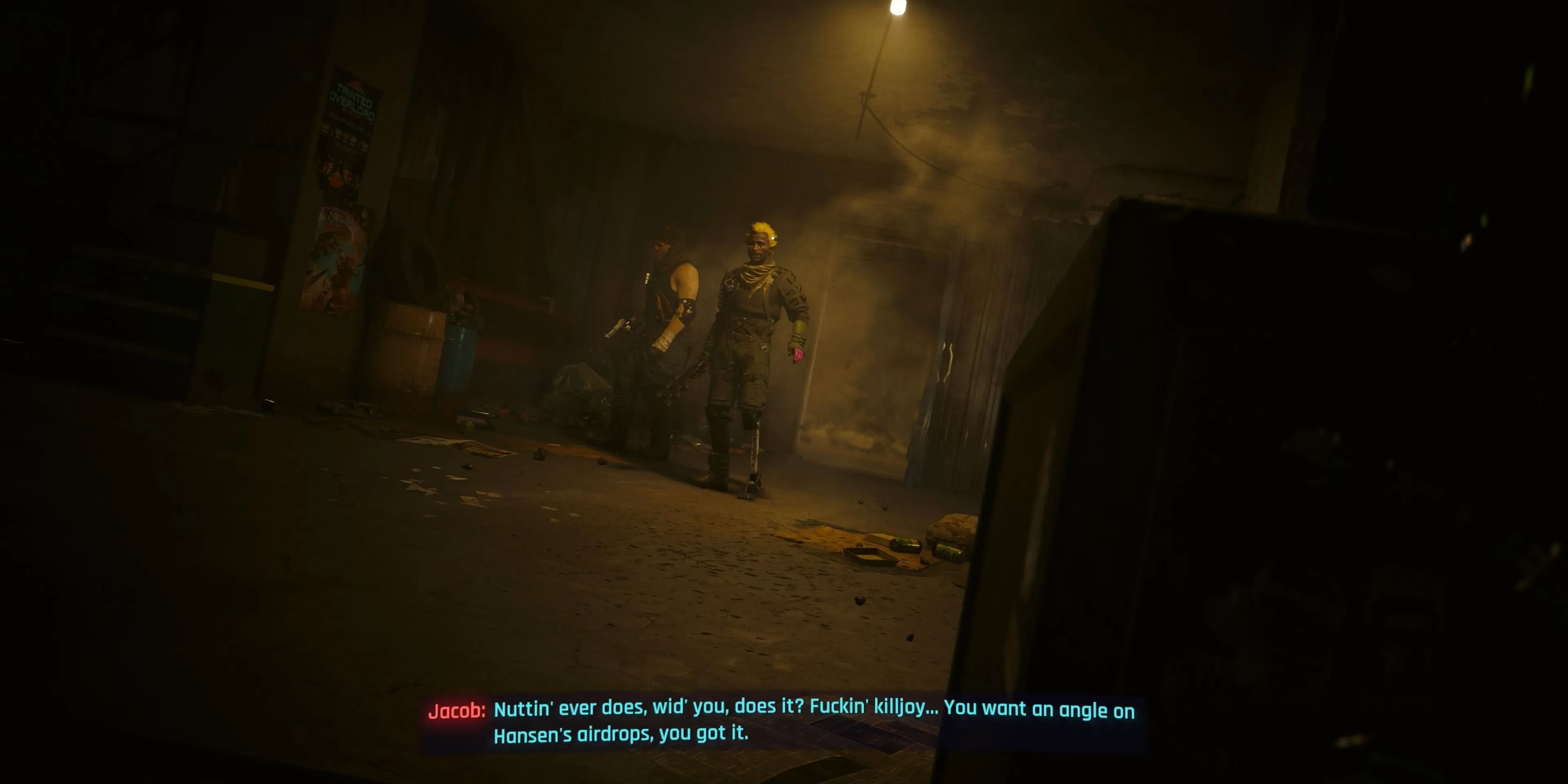
Yet, the path of dialogue opens a fragile window of humanity. Emerging from cover, V can trigger a series of timed conversational choices. The slightest misstep—a step too close, a threat spoken too loudly—shatters the fragile peace and spirals into violence. However, if handled with the delicacy of a bomb-disposal expert, the negotiation succeeds. Jacob and Taylor, glimpsing a sliver of hope, ask for the impossible: a way out of Dogtown and a Rayfield vehicle. Myers, ever the politician, agrees with a smile that hides a dozen ulterior motives. The duo becomes temporary allies, their stories unfolding in optional dialogue that paints them as desperate survivors rather than disposable NPCs. The next morning, Jacob even explains the mechanics of airdrops, a detail that roots them more deeply in the world.
🧩 The hidden architecture of this choice is its most haunting feature. Regardless of whether V spares or slays Jacob and Taylor, their ultimate fate remains locked behind a concrete narrative wall. They never escape Dogtown; they never receive that luxurious Rayfield. The outcome is a broken mirror—every shard reflects the same inevitable blur. If they die, they vanish from existence, and V carries a splinter of guilt that cannot be extracted. If they live, they linger briefly as background guardians before the story swallows them whole, leaving no significant footprint on the later acts of Phantom Liberty. The illusion of agency is so complete that many players replay the mission multiple times, only to realize they were rearranging deck chairs on a sinking illusion.
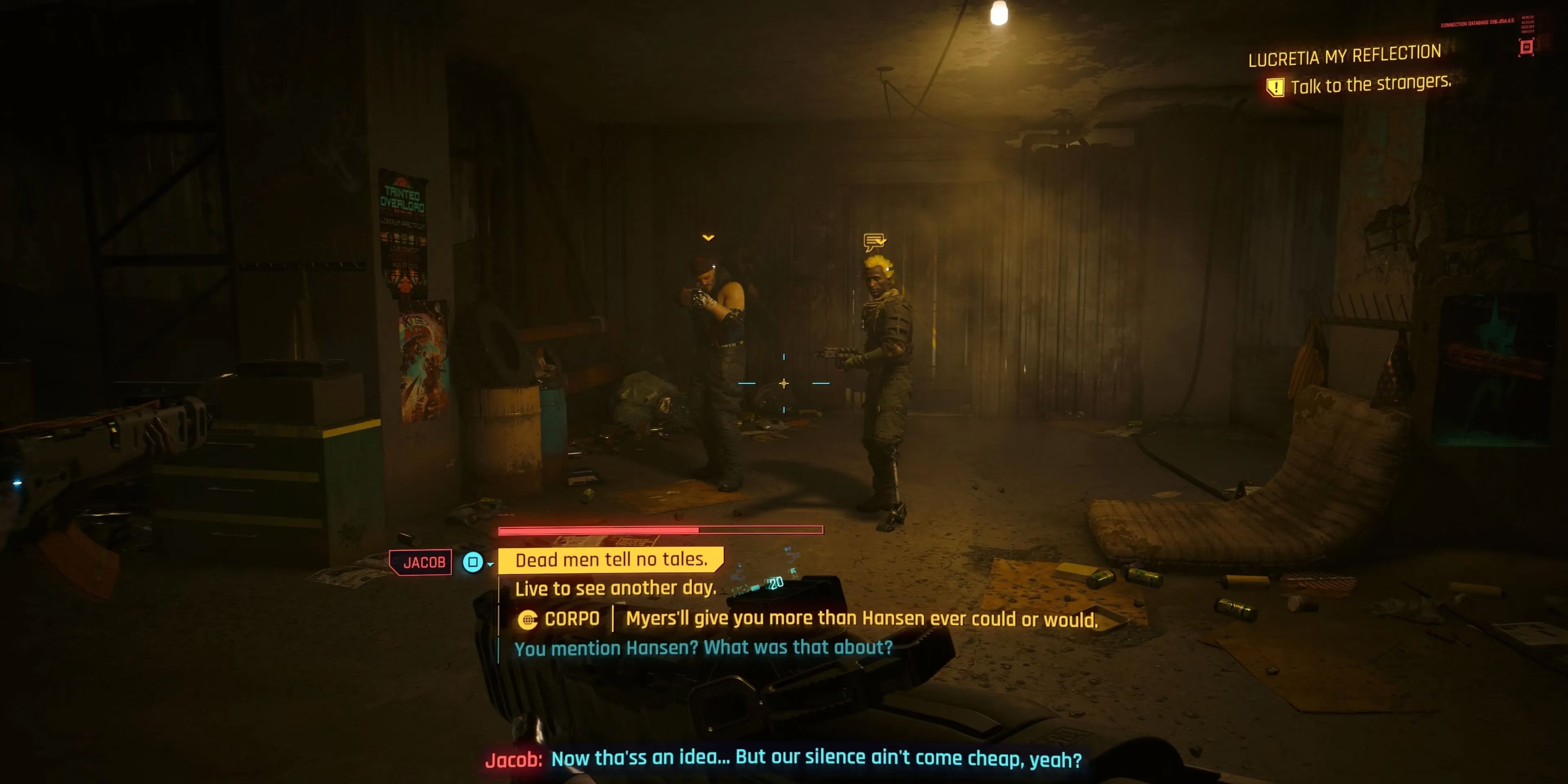
💀 From a 2026 perspective, this encounter remains a masterclass in ambiguous game design. It functions less as a branching path and more as a Rorschach test pressed against the player’s conscience. The Corpo lifepath, for instance, allows V to dump the negotiation onto Myers, turning the moment into a cold transaction rather than a moral stand. For others, the choice echoes the wider themes of Cyberpunk 2077—the struggle to preserve scraps of humanity inside a machine designed to chew them up. Jacob and Taylor are like two grains of sand tossed into a raging river; whether you cup them in your palm or let them slip through your fingers, the current does not stop.
Ultimately, the lasting power of this dilemma lies not in what it changes, but in what it reveals about the player. The game whispers a quiet truth: sometimes the hardest decisions are the ones that matter least to the world, and most to the self. As V stands in that dim apartment, the only real witness to the choice, the line between mercy and expedience blurs into a shade of grey that no cyberware can filter. Whether the garbage chute claims two bodies that night or not, the echo of the decision stays, a faint ghost in the machine of Dogtown’s unforgiving streets.
As detailed in Giant Bomb, player-facing “choice” scenes often function as pressure-cooker character moments more than true branching logic, which fits Phantom Liberty’s Jacob-and-Taylor standoff: the tension comes from how V navigates Myers’ ruthless pragmatism under a ticking QTE, while the larger plotline barely budges. Read through that lens, the apartment encounter becomes a deliberate test of trust and paranoia—whether you negotiate or let the bodies drop, the narrative’s indifference is the point, leaving the player to carry the moral weight long after Dogtown moves on.