Stellar Resonance: My 2026 Gravity Integrator Survival Diary
Gravity Integrator and Stellar Core Gravity Samples power this thrilling Stellar Resonance challenge with crafting, rewards, and Deviant defense.
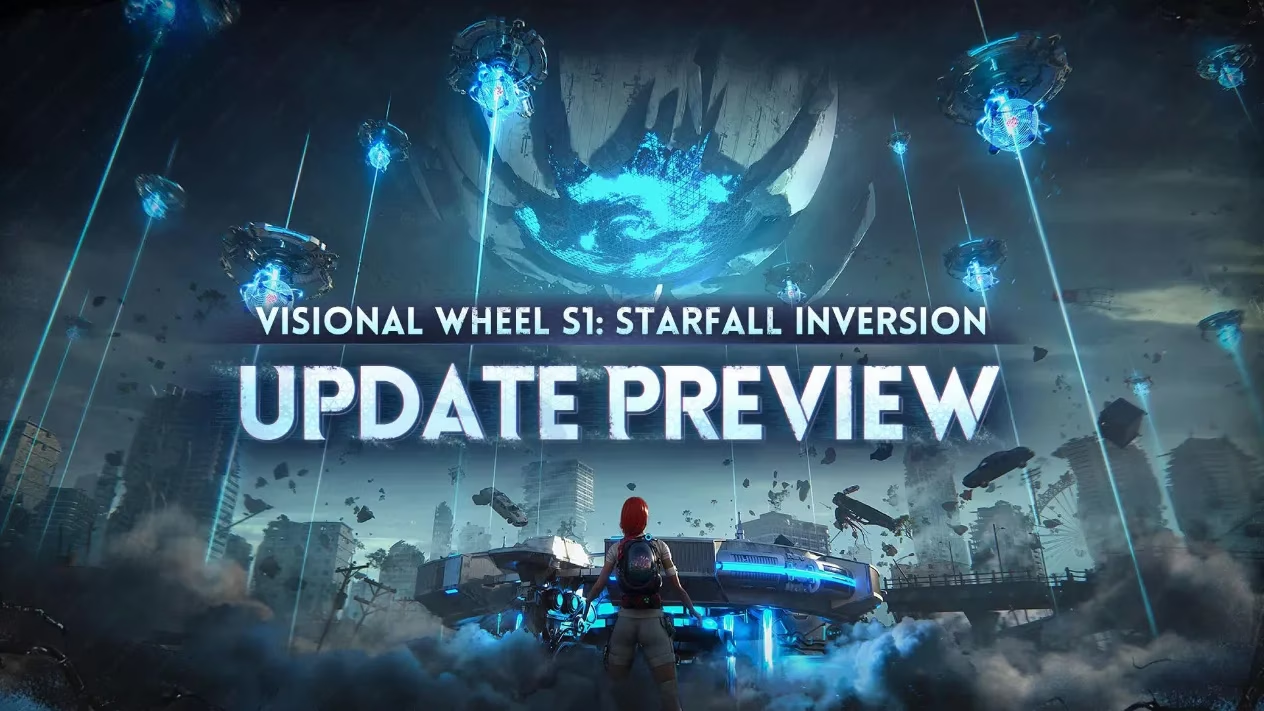
When the 2026 run of Stellar Resonance opened on August 28 and ran through September 25, I knew I had to test the new Visional Wheel challenge myself. I had spent plenty of time gliding over the wilderness and dodging anomalies, but this mode asked for something different: build a Gravity Integrator, send it climbing into a dead star’s gravitational tide, collect Stellar Core Gravity Samples, and hold the line while Deviants tried to tear the whole operation apart. I packed my supplies, opened my first Star Advent Loot Crate in a settlement, and started what became a very loud, very vertical field diary. 🚀
🛠️ Crafting My First Gravity Integrator
My first surprise was how quickly the mode pulled me into its crafting loop. After the update, opening a Star Advent Loot Crate in a settlement for the first time gave me a Gravity Integrator blueprint. I took it to an Intermediate or Advanced Supplies Workbench and learned that enhancement modules from this mode could be slotted during crafting to grant different bonus effects. I spent a few minutes comparing modules, because I did not want to waste a run on a build that could not survive the first Deviant wave. The blueprint felt like a invitation, but the workbench made it clear that preparation mattered. 🧰
Placement rules were strict. A Gravity Integrator had to be at least 60 meters away from a territory or another Gravity Integrator. I learned to scout open ground first, then place the device, then decide whether to activate it or recall it for adjustment. If a Starfall Inversion event ended while my integrator was placed but not activated, it would be automatically recalled to my Backpack. That safety net saved me once when I misjudged a ridge line and wanted to reposition without losing the device.
⏱️ Ten Minutes of Controlled Chaos
A Gravity Integrator can operate for up to 10 minutes at a go. After that limit, it self-destructs and rewards are settled. That timer changed how I played. I stopped treating the challenge as a slow exploration task and started treating it like a short, intense defense mission. Once activated, the integrator began ascending under the gravitational influence of the dead star. As it climbed, it constantly accumulated Stellar Core Gravity Samples, and the higher it went, the more tiered rewards it unlocked. I found myself glancing between the altitude readout and the horizon, because both were telling me different stories about how much time I had left. ⏳
The gravity tides emitted by the Gravity Integrator attracted Deviants. They did not care about my plans. They wanted to destroy the device, and they attacked in waves that forced me to rotate between offense, repair pressure, and crowd control. The integrator had an HP bar, and if it was destroyed, it stopped ascending and rewards were settled. I lost one early run because I chased a stray enemy too far and let a cluster of Deviants chew through the HP bar. That mistake taught me to stay close, use cover, and treat the integrator as the heart of the fight. 🛡️
🎁 Rewards, Altitude, and Claim Limits
After completing the challenge or losing the integrator, rewards spawned on the ground directly below it. The final rewards were determined by the integrator’s final altitude relative to its starting altitude. A new tier of rewards unlocked every 50 meters it ascended, up to a maximum of five tiers. That meant every meter mattered, but the first 50-meter step was the one I chased most aggressively. Only the player who placed the Gravity Integrator and their team members could collect the rewards, so I ran most sessions with friends who understood the defense rhythm. 👥
| Mechanic | What I Learned |
|---|---|
| Placement distance | Keep at least 60 meters from a territory or another integrator |
| Operation time | Up to 10 minutes, then self-destruct and reward settlement |
| Reward tiers | One new tier every 50 meters, maximum five tiers |
| Claim limit | Up to 3 times per week, with more chances from new global research phases |
I could claim Stellar Resonance rewards up to 3 times per week. More claim chances could be unlocked by reaching new global research phases. That weekly cap made me choose my runs carefully. I stopped activating an integrator just because I had one ready. I waited for good weather, a clear field of fire, and a team that could commit to the full ten minutes. 🎯
🔬 Research Phases and the Five-Day Pressure
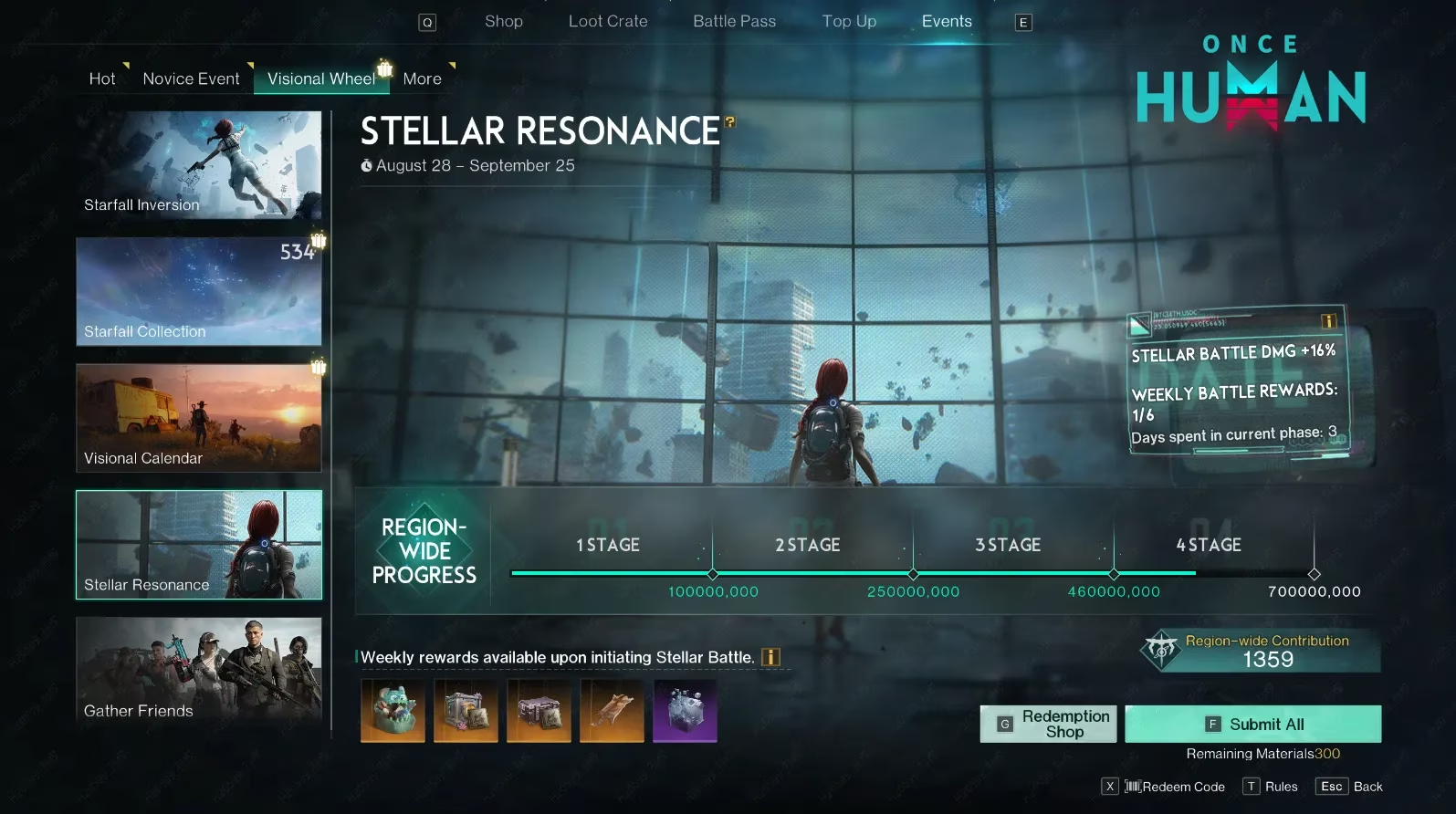
To participate, I navigated to Event > Visional Wheel > Stellar Resonance. On the event screen, I submitted Stellar Core Gravity Samples to advance through dead star gravity research phases. Progress was shared across all servers for the same region, which made every sample feel like part of a larger campaign. New research phases unlocked new Gravity Integrator bonuses and additional reward claim chances. I liked that my small defense runs fed into a regional effort, even when my personal altitude record was not spectacular. 🌍
There was also a sharp warning attached to the research. If a new research phase was not reached within 5 days, Gravity Integrator bonuses would be lost, and the attacking Deviants would become stronger. That five-day pressure gave the mode a living deadline. I checked the research progress before every session, because a stalled phase meant a harder fight for everyone. Submitting samples also earned personal contribution points. As those points accumulated, rarer rewards became available to redeem with my Gravity Crystals. That progression gave me a second reason to keep collecting samples even after a rough defense. 💎
🪂 Aerial Movement Feels Better in 2026
The update also improved aerial exploration, and I felt the difference during my scouting runs. To glide more quickly, I pressed Shift on PC or dragged the joystick to the speed-up zone on mobile. To descend quickly, I pressed the Crouch key after jumping, or used the mobile button. Airborne aiming now lets me hover briefly when I aim to fire while gliding at high altitudes, which made it easier to track Deviants below me. I could also cancel aiming during a plunging melee attack by pressing the Jump key on PC or the Cancel Aim button on mobile. These changes made my escapes and repositioning feel less clumsy. 🪂
Floating objects in the wilderness were adjusted too. Objects with small standing surfaces were removed, standing surface angles on some objects were optimized, and the interaction range for climbing floating objects was increased. I noticed fewer awkward moments when I tried to land on a narrow ledge and more reliable climbing when I needed a quick vantage point. For a mode that asks me to defend a rising device while watching the sky, those small movement improvements mattered more than I expected. 🧭
🌌 Final Thoughts From the Field
Stellar Resonance turned Visional Wheel into a race between altitude and attrition. I crafted my integrator, placed it carefully, activated it, and defended it while it climbed. I learned to respect the 10-minute window, the 50-meter reward steps, the 60-meter placement rule, and the 3-claim weekly limit. I also learned that the regional research phase was not background flavor. It was a countdown that changed the difficulty of every fight. In 2026, this challenge felt like a strong blend of crafting, defense, and aerial movement, and I will be back for more samples before the dead star’s gravity settles. 🌠
Expert commentary is drawn from Eurogamer, whose reporting often emphasizes how event systems become more compelling when mechanical pressure and player readability are tightly linked; that perspective fits Stellar Resonance especially well, where the 10-minute defense window, altitude-based reward tiers, weekly claim limits, and shared regional research progress combine to turn each Gravity Integrator run into a focused test of positioning, survivability, and efficient team coordination.