My Journey Through Lands Uncharted: A Player's Ode to Conquest and Creation
Delve into the thrilling conquests of open-world gaming, exploring the strategic liberation of territories in Just Cause 4 and the robust settlement building in Fallout 4.
As I stand on the precipice of a new year, 2026 stretching before me like a vast, unmarked map, my mind wanders back to the digital worlds that have shaped my understanding of freedom, struggle, and the profound satisfaction of claiming a piece of land as my own. The main draw of any open-world game is that it offers adventure and exploration, allowing my spirit to soar wherever it wills. There are many reasons for a player like me to conquer the map—to take back control from a pixelated oppressor, to reclaim an area lost to the cruel march of time within the game's lore, or for any other story-related reason that tugs at the heartstrings. Taking these zones gives me a sense of meaningful progression, a tangible thread connecting my actions to the evolving tapestry of the world. While the reward of taking over these areas varies, capturing zones inevitably increases my territory as I become more powerful, all the while giving me some much-needed respite after the adrenaline of adventuring. This is my personal anthology, a collection of memories from games that let me explore massive worlds while I wrested control of areas from my enemies, each conquest a story written in code and carved into my memory.
10. Just Cause 4: Expanding The Frontlines
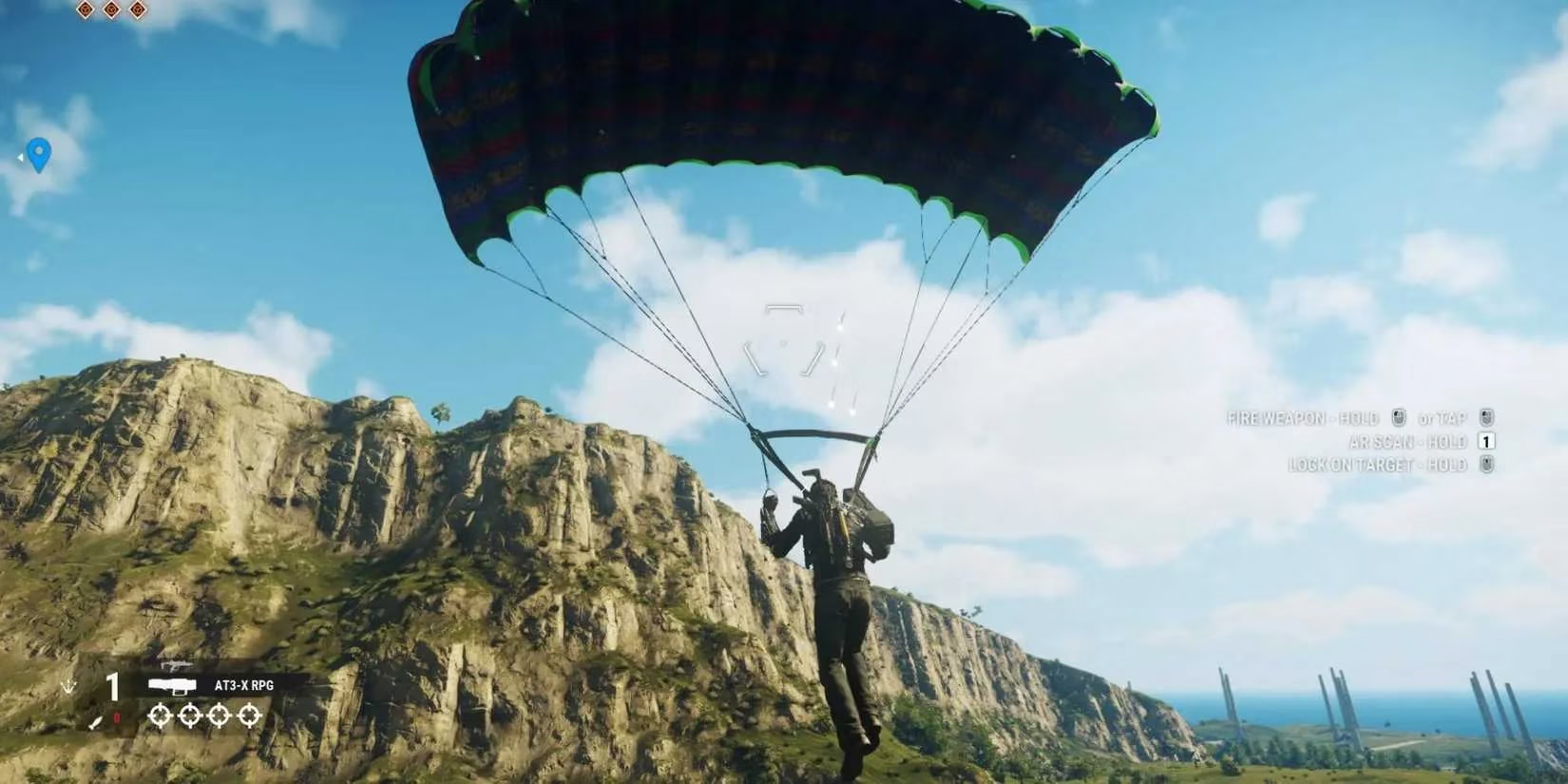
As a story centered around a Rebellion fighting against an oppressive regime, the Just Cause series has always been about chaotic liberation. I remember the liberation missions where I could take over key areas to weaken the enemy's control over a region. Unlike the typical Just Cause liberation mechanic, Just Cause 4's "Region Strike" missions allowed me to expand or extend the frontlines of the rebellion, giving a more linear, strategic progression of control. Many fans who were used to the franchise's previous iterations weren't too pleased about this change. For me, there was a unique tension—liberating an area eliminated enemy forces, allowing me to deploy troops onto the frontline, turning the map into a living chessboard of my own making.
9. Fallout 4: Another Settlement Needs Your Help
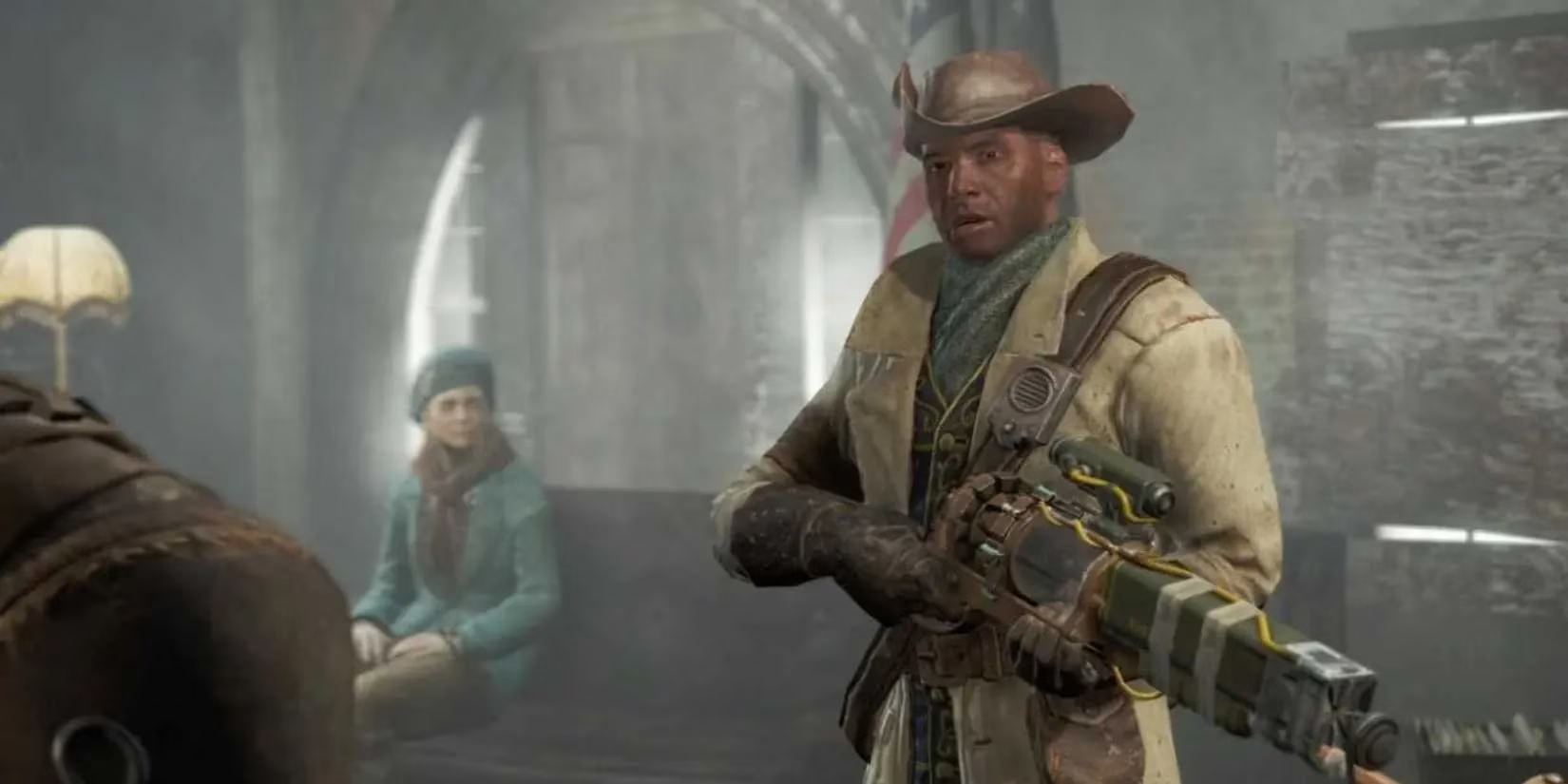
Ah, the Commonwealth. Aside from fighting the myriad of irradiated monsters and raiders, Fallout 4 gifted me with a robust settlement mechanic that allowed me to liberate sections of the map and repopulate them with NPCs. As the Sole Survivor, I didn't just fight; I built. I managed shelters, shops, and even decorations to spruce up my settlements, creating pockets of order in the chaos. Recruiting NPCs to help manage resources while setting up defenses from would-be attackers felt like true stewardship. These settlements provided much-needed repeatable content long after the main stories (including DLCs) faded. The comprehensive building system was my canvas, allowing for elaborate designs, from formidable forts to hopeful townships. Even in the apocalyptic wasteland, I found reprieve in the cozy settlements I'd worked so hard to create—each light in the darkness a testament to persistence.
8. Dying Light 2 Stay Human: Hardcore Parkour!
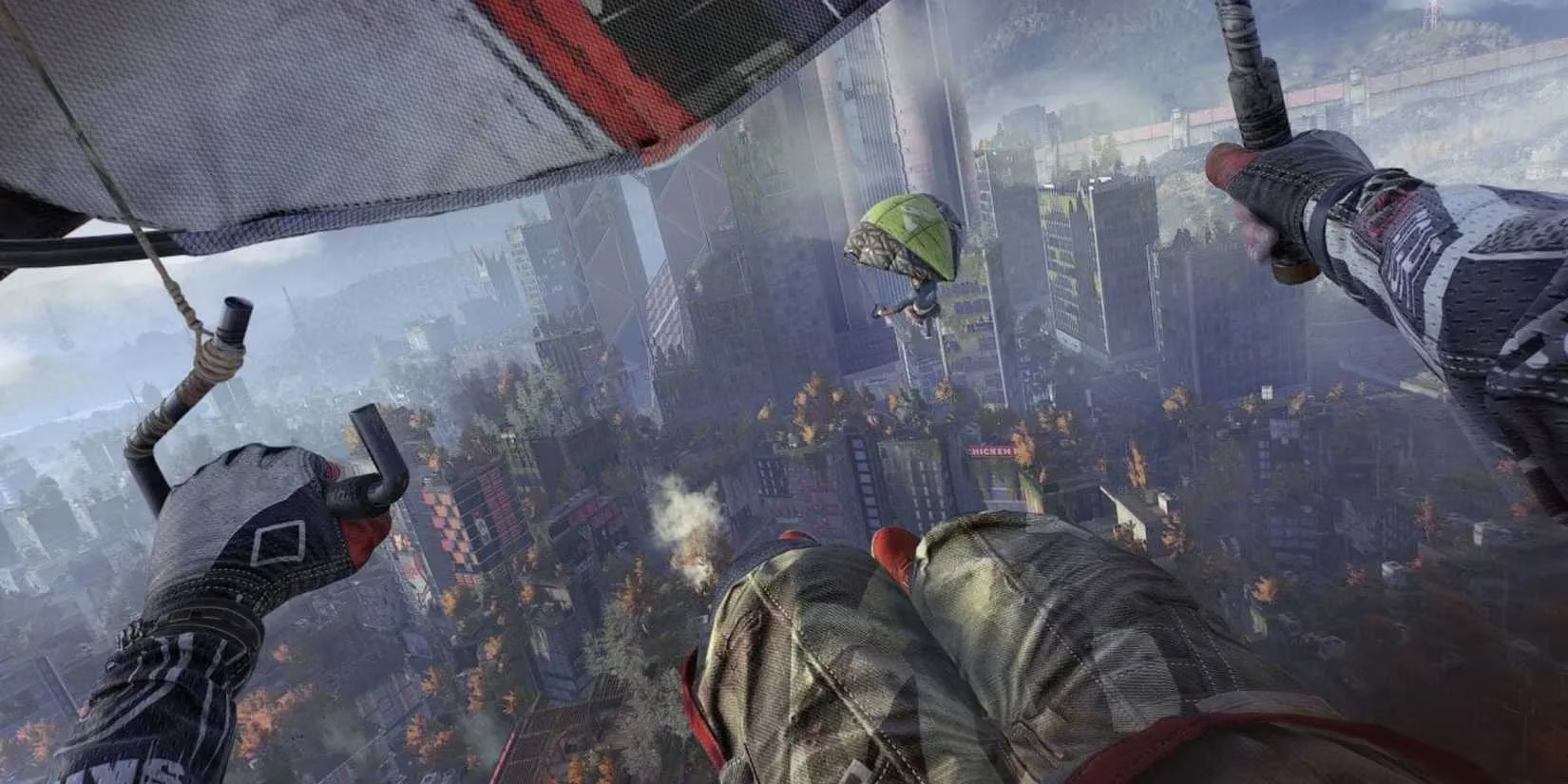
Villedor was a vertical jungle, and its conquest was a dance. Dying Light 2 featured Bandit Camps and Windmills as points of interest—major areas to take over and establish safe zones for fellow survivors. The four Bandit Camps served as intense stealth missions, hearts pounding in the dark. The Windmills, meanwhile, were pure parkour challenges, tests of agility and timing. Liberating these areas didn't just unlock checkpoints; it opened shops and carved out islands of safety in a city of horrors. With countless climbable ledges and scalable walls, these camps, like the rest of Villedor, were my personal playgrounds to showcase a fluid, deadly grace.
7. The Division 2: Venture Into The Dark Zone
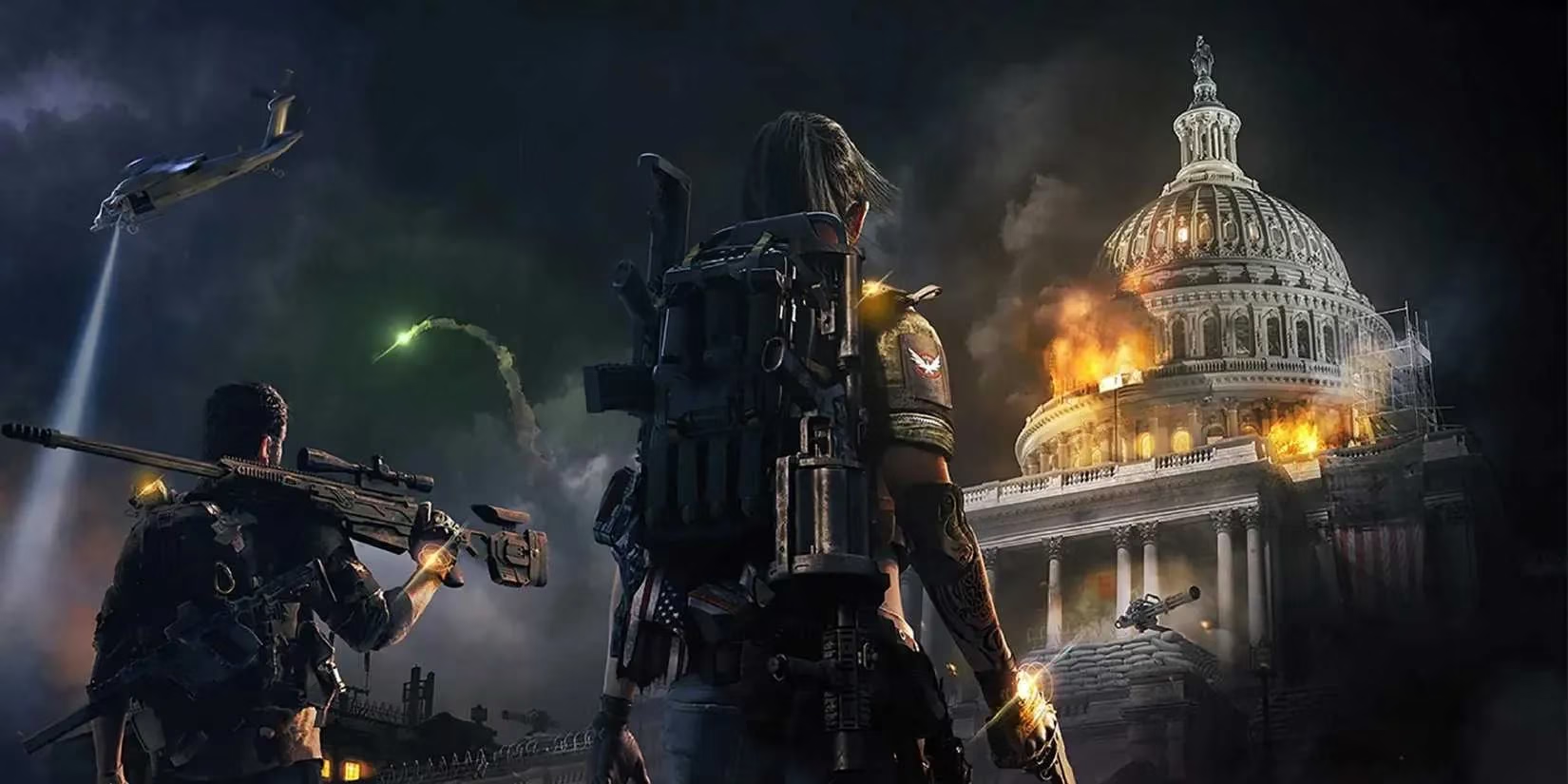
Washington D.C., broken and beautiful. Much like its predecessor, Tom Clancy's The Division 2 presented a quarantined section of a dystopian America split into different zones that I had to explore and conquer from different factions. With a wide, diverse selection of classes and abilities, liberating Control Zones and finding Settlements offered glimpses of peace. But then, there were the Dark Zones—areas that were too dangerous to truly conquer. They held hidden dangers: powerful enemies and the ever-present threat of Rogue Agents, players who thrived in the chaos of PvP. Yet, the siren call of high-tier loot was irresistible. The Dark Zone was less about conquest and more about survival, a tense, unclaimed frontier where every alley could be an ambush.
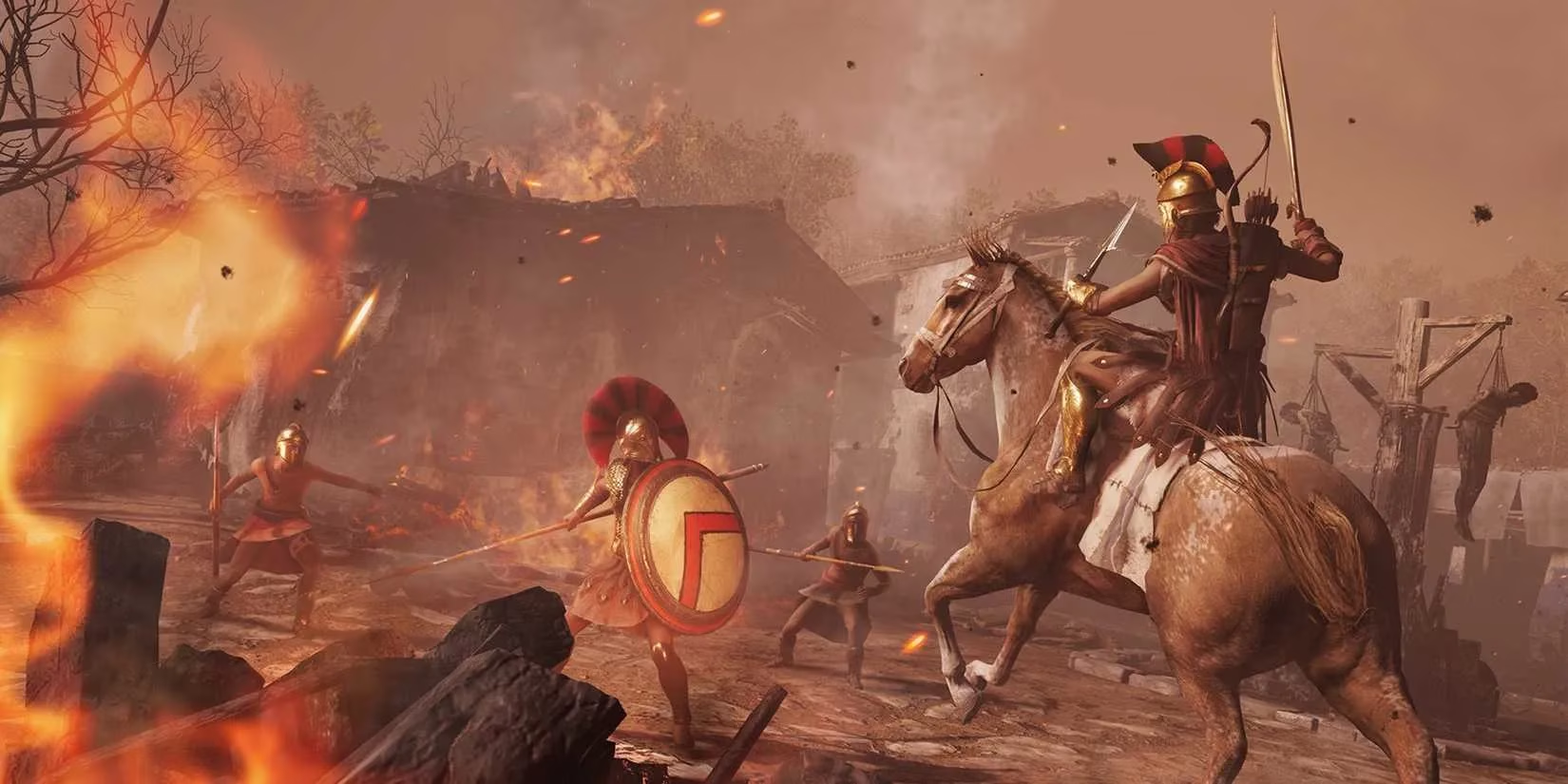
6. Assassin's Creed Odyssey: This Is... Sparta!
The sun-drenched cliffs of ancient Greece. Set during the Peloponnesian War, Assassin's Creed Odyssey thrust me into the sandals of a mercenary, free to choose a side or play them all. The open-world conquest involved the typical outpost-clearing missions—taking out enemy troops and the commander with sword and stealth. But strategy mattered more: I could weaken a region by assassinating its leader and sabotaging its resources. Once weakened enough, the real spectacle began: I could join a conquest battle to fight on the attacking or defending side. While rewards came either way, joining the attacking side was a glorious, chaotic challenge that yielded better loot. It made every conquered region feel earned, a piece of history reshaped by my blade.
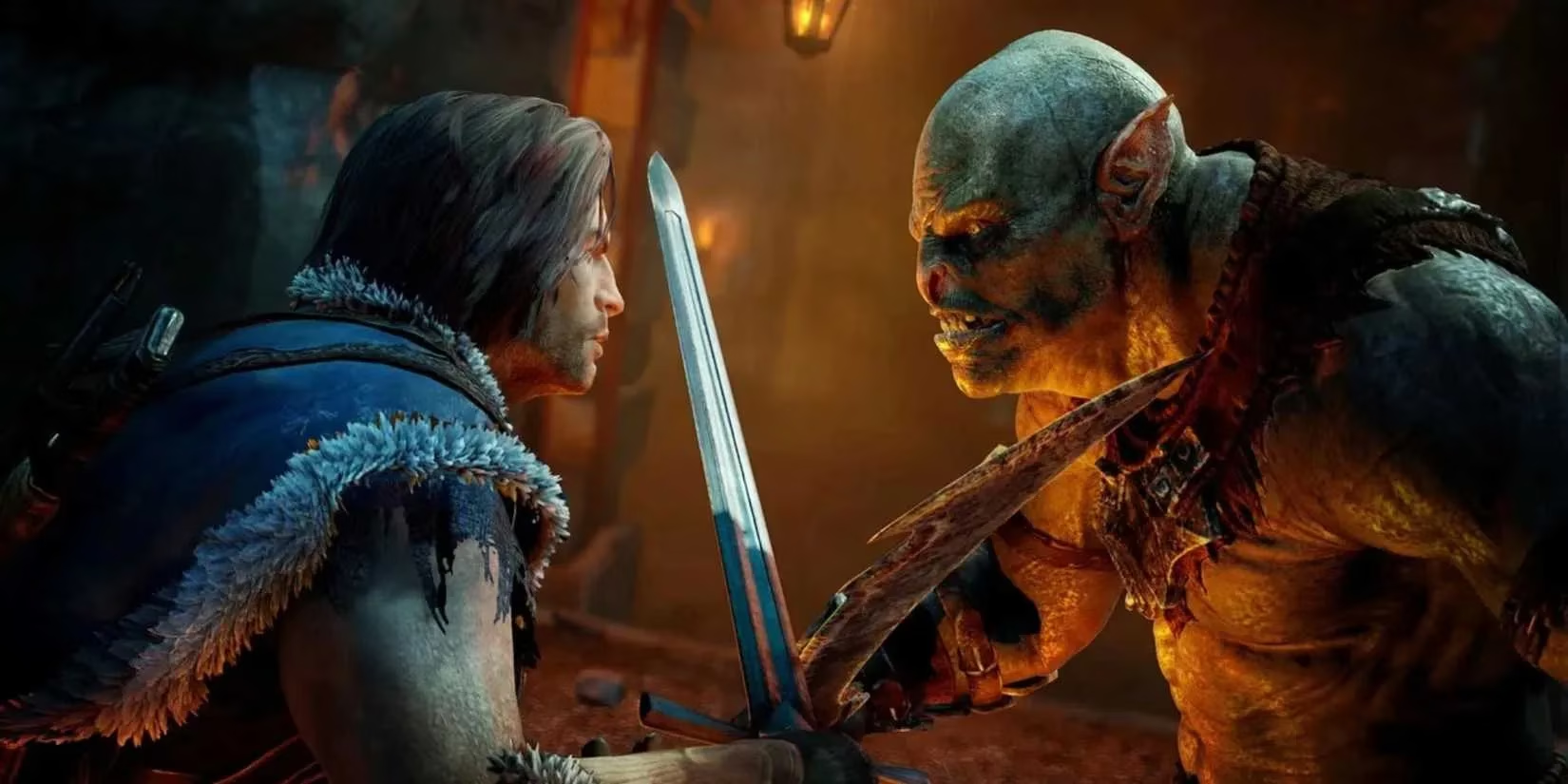
5. Middle Earth: Shadow Of Mordor: A Crusade Against Sauron
The air in Mordor tasted of ash and vengeance. As Talion, my crusade against Sauron was personal, a journey through blighted lands, inching closer to my goal one dead Uruk at a time. Beyond the innovative Nemesis system and intense combat, Mordor was an open world littered with orc camps and patrols. The key to claiming this land wasn't just slaughter; it was infiltration. Talion could infiltrate these camps and locate Forge Towers. Unlocking these towers transformed them into respawn and fast travel points, strategic footholds in the enemy's heartland. Each activated tower was a beacon, a declaration that I was reclaiming this dark land, piece by shadowed piece, ensuring I could always get back into the fight.
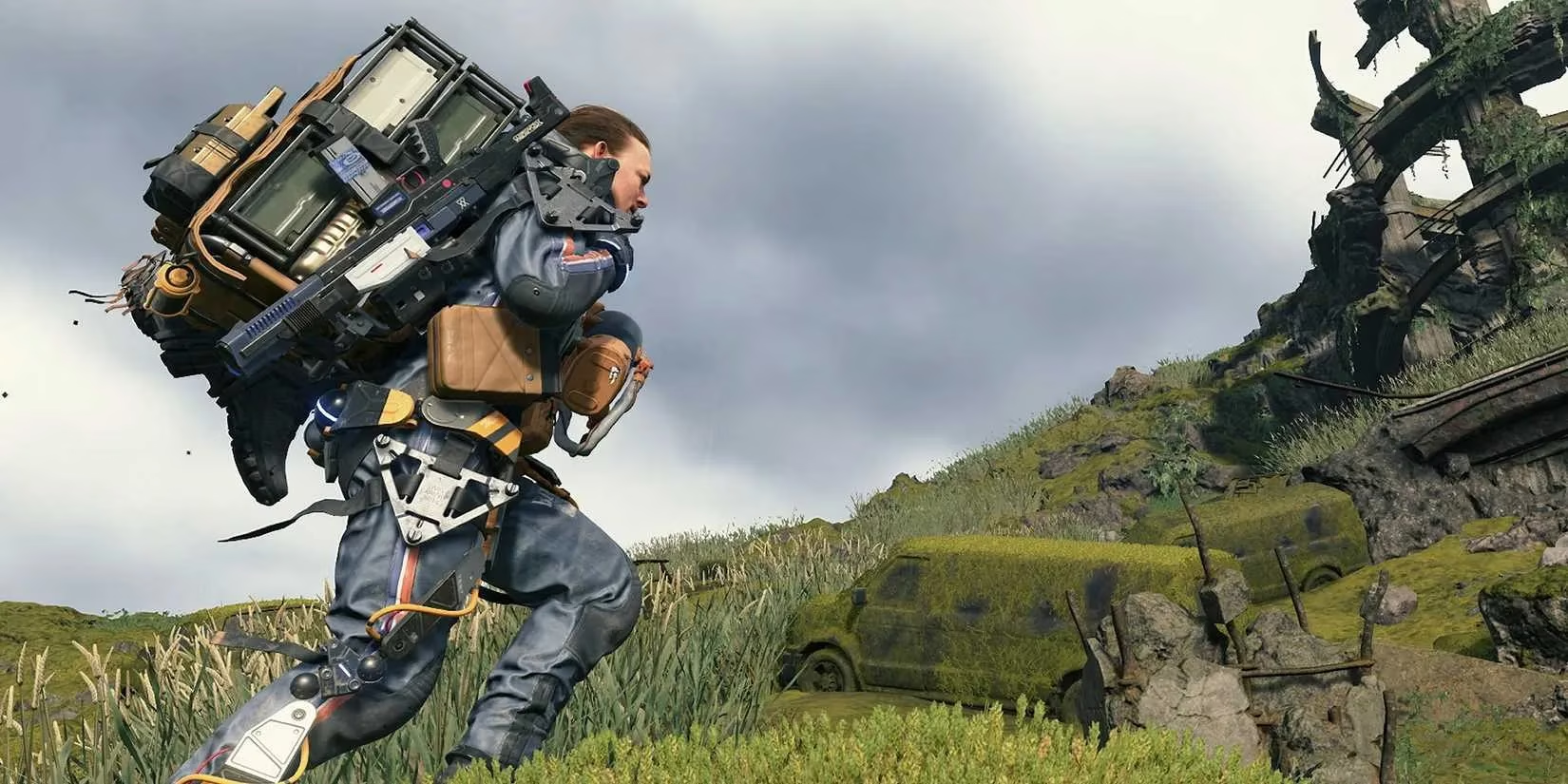
4. Death Stranding: Reconnecting America
They called it a "walking simulator," but they were wrong. Death Stranding was a pilgrimage. Its theme centered on Sam Porter Bridges as he reluctantly reconnected a fragmented America. My gameplay reflected this perfectly. I traveled not just to deliver packages, but to collect resources to build roads, bridges, and other structures—lifelines for unseen fellow Porters. The reward wasn't territory in a traditional sense, but connection. Despite its lonely vistas, the game had multiplayer elements that allowed me to connect to a server with other players. I never saw them, but I felt them. I saw the marks they left behind: a bridge over a raging river, a ladder up a sheer cliff, a postbox of supplies, or words of encouragement etched into the landscape. I didn't conquer America; I stitched it back together, one strand at a time, finding community in a world of quiet isolation.
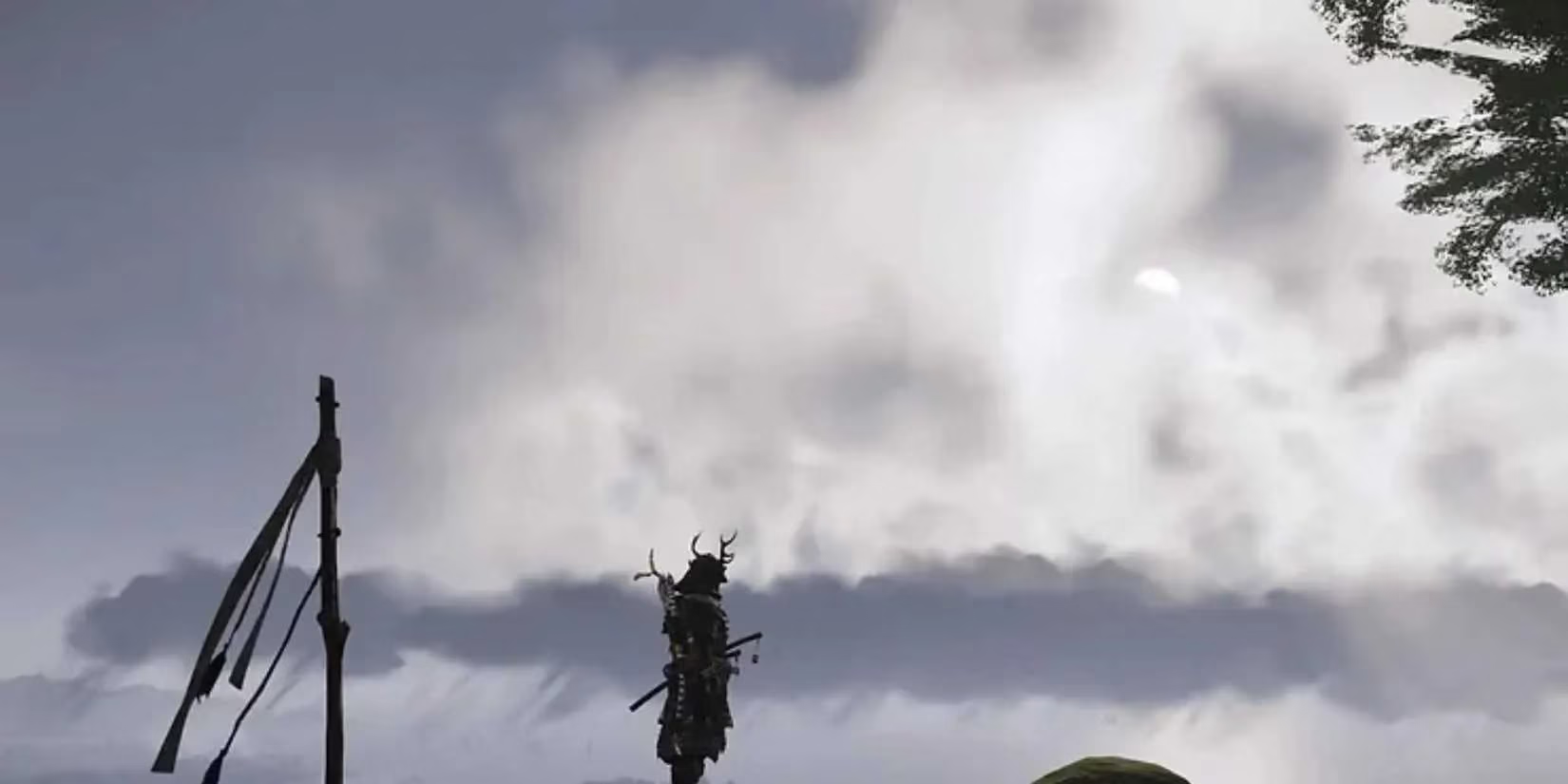
3. Ghost Of Tsushima: Drive The Mongols Back
Tsushima is a place of heartbreaking beauty, and Ghost of Tsushima deserved every accolade. Its incredibly vast map felt profoundly satisfying to explore and liberate. As Jin Sakai, I encountered villages and towns overrun by the Mongol army and bandits. Liberating these zones did more than provide fast travel points; the settlements would provide shops and resources, fueling my guerrilla war. The true victory, however, was in the aftermath. Once liberated, I could bask in the quiet triumph as displaced villagers returned, thanking Lord Sakai, repopulating the homes and fields. The settlements transformed from scenes of despair to pockets of vibrant life, a visual and emotional reward that made every fight meaningful.
2. The Legend Of Zelda: Tears Of The Kingdom: Ultimate Open World
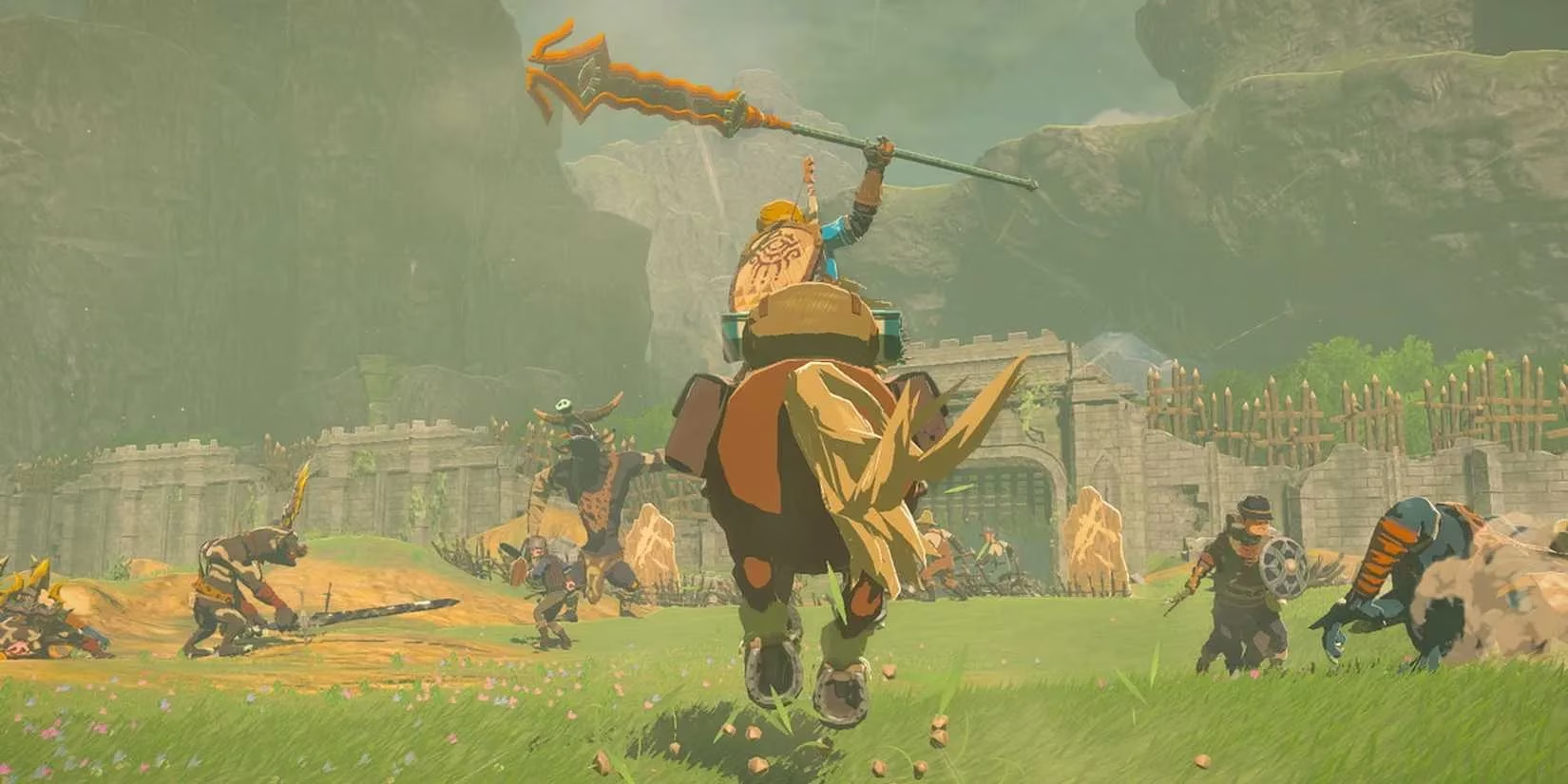
Choosing between Tears of the Kingdom and its predecessor is a debate for the ages, but as of 2026, ToTK stands as a masterful evolution. As Link, my quest to thwart Ganondorf was a conquest of knowledge and infrastructure. I activated Shrines and Skyview Towers, creating a web of fast travel that made traversing the vastness of Hyrule trivial. But the conquest went deeper—literally. In the depths below, I lit up portions of the map, pushing back an eternal darkness to reveal vast, undiscovered caverns. This wasn't just about claiming land from an enemy army; it was about illuminating the unknown, conquering fear and oblivion itself, and mastering a world with layers of verticality and mystery that still feels fresh today.
1. Far Cry 6: For Libertad!
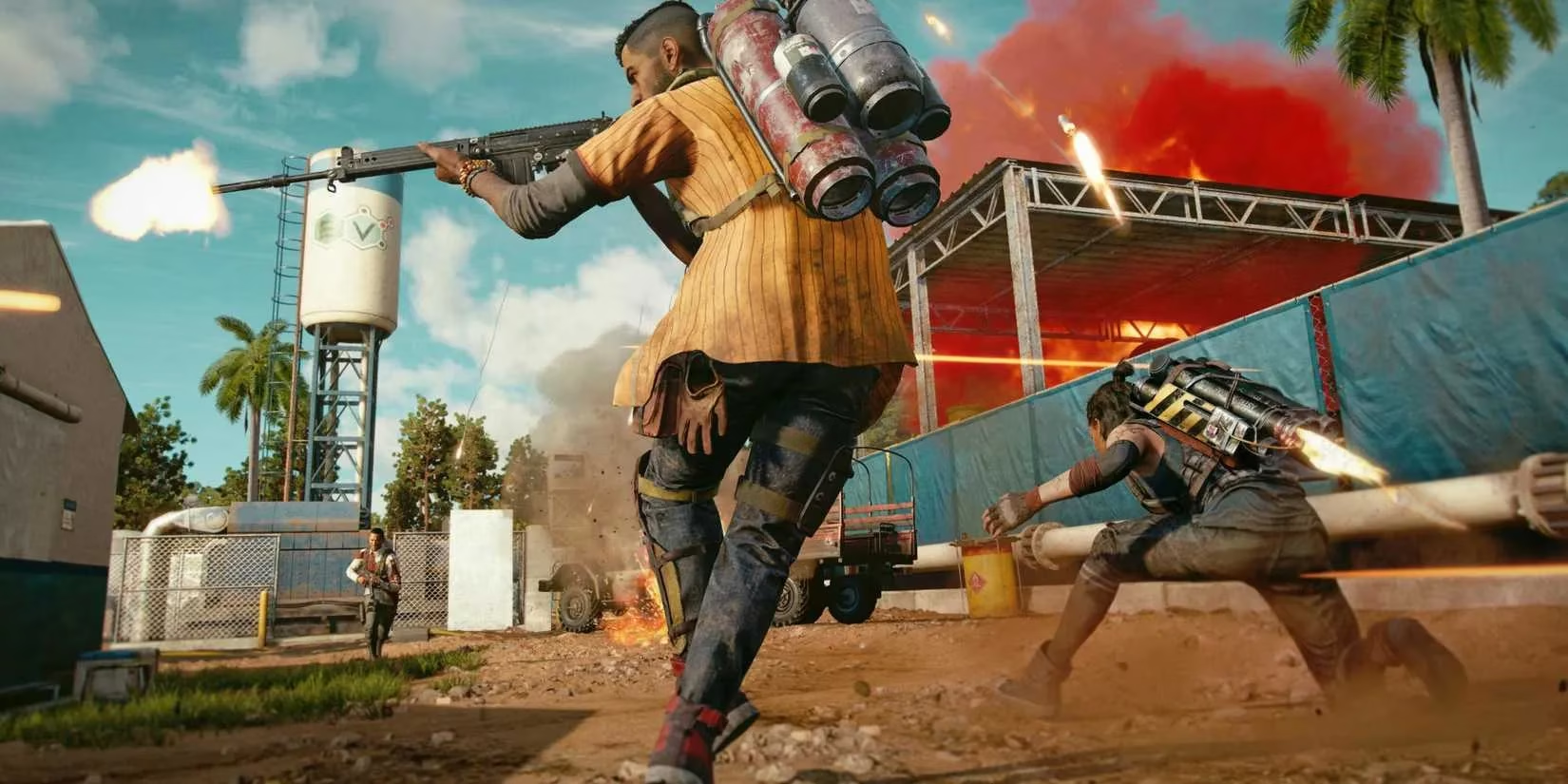
And so we come to Yara, a land of vibrant revolution. As is tradition, Far Cry 6 featured military outposts I had to take over to expand my territory. As Dani Rojas, taking these FND outposts was the heartbeat of the insurgency against Anton Castillo's regime. Each base offered a choice: blowing stuff up with glorious, cathartic brute force or silently sabotaging the enemy base with stealth and cunning. Liberating outposts unlocked fast travel points, but the true reward was seeing the Libertad guerrillas move in. They would populate the area, and in a beautiful feedback loop, mark new points of interest on my map as I continued to explore the island of Yara. Each conquered outpost didn't just shrink the enemy's map; it actively grew my own, a perfect metaphor for a revolution—and for the player's journey of claiming a world, one defiant victory at a time.
| Game | Core Conquest Mechanic | My Personal Feeling |
|---|---|---|
| Just Cause 4 | Region Strikes & Frontline Expansion | Strategic, chess-like territorial control. |
| Fallout 4 | Settlement Building & Management | Creative stewardship and building hope. |
| Dying Light 2 | Liberating Camps & Windmills | A parkour dance of stealth and agility. |
| The Division 2 | Control Zones & Dark Zone Survival | Tense, high-risk reclamation and loot runs. |
| AC: Odyssey | Weakening Regions & Conquest Battles | Shaping history through choice and chaos. |
| Shadow of Mordor | Infiltrating Camps & Activating Towers | Establishing strategic footholds in evil's heartland. |
| Death Stranding | Building Infrastructure & Reconnecting | Finding quiet community in profound solitude. |
| Ghost of Tsushima | Liberating Towns & Villages | Emotional restoration and visual reward. |
| Zelda: ToTK | Activating Towers & Illuminating the Depths | Mastering and illuminating a layered world. |
| Far Cry 6 | Guerrilla Takeover of Outposts | Growing the revolution map by map. |
These worlds, these conquests, are more than checklists on a map. They are stories I lived. In 2026, as games grow ever more expansive, the core thrill remains: the journey from stranger to savior, from outsider to owner, one liberated zone, one rebuilt settlement, one reconnected strand at a time. The open world is an invitation, and my answer is always to leave my mark upon it. 🗺️⚔️✨
Expert commentary is drawn from Rock Paper Shotgun, whose long-form reporting on open-world design often underscores why “zone control” loops feel so compelling: every liberated outpost, rebuilt settlement, or newly connected route turns raw exploration into lived-in progress, giving players a readable before-and-after that mirrors the emotional arc in games like Far Cry 6, Ghost of Tsushima, and Death Stranding.