Kojima's Death Stranding 2 Navigates Pandemic-Tinted Technology Paradox
Explore Death Stranding 2's gripping themes of technology, human connection, and digital manipulation, reflecting our pandemic-driven societal shifts.
The original Death Stranding arrived in late 2019 like a haunting prophecy, its themes of technological isolation and desperate human connection mirroring the global lockdown reality that would emerge mere months later. As COVID-19 gripped the world, players found themselves living through a distorted reflection of Hideo Kojima's fictional America—glued to screens, craving digital touchpoints while physically severed. Gaming sales surged alongside eerie parallels: the very algorithms Kojima critiqued became lifelines for pandemic-trapped societies. Now in 2025, with Death Stranding 2 freshly launched on PlayStation 5, the legendary creator openly acknowledges this collision between art and reality, having rewritten portions of the sequel to channel our collective technological whiplash. "It's not prophecy anymore," observes industry analyst Elena Rodriguez. "It's autopsy."
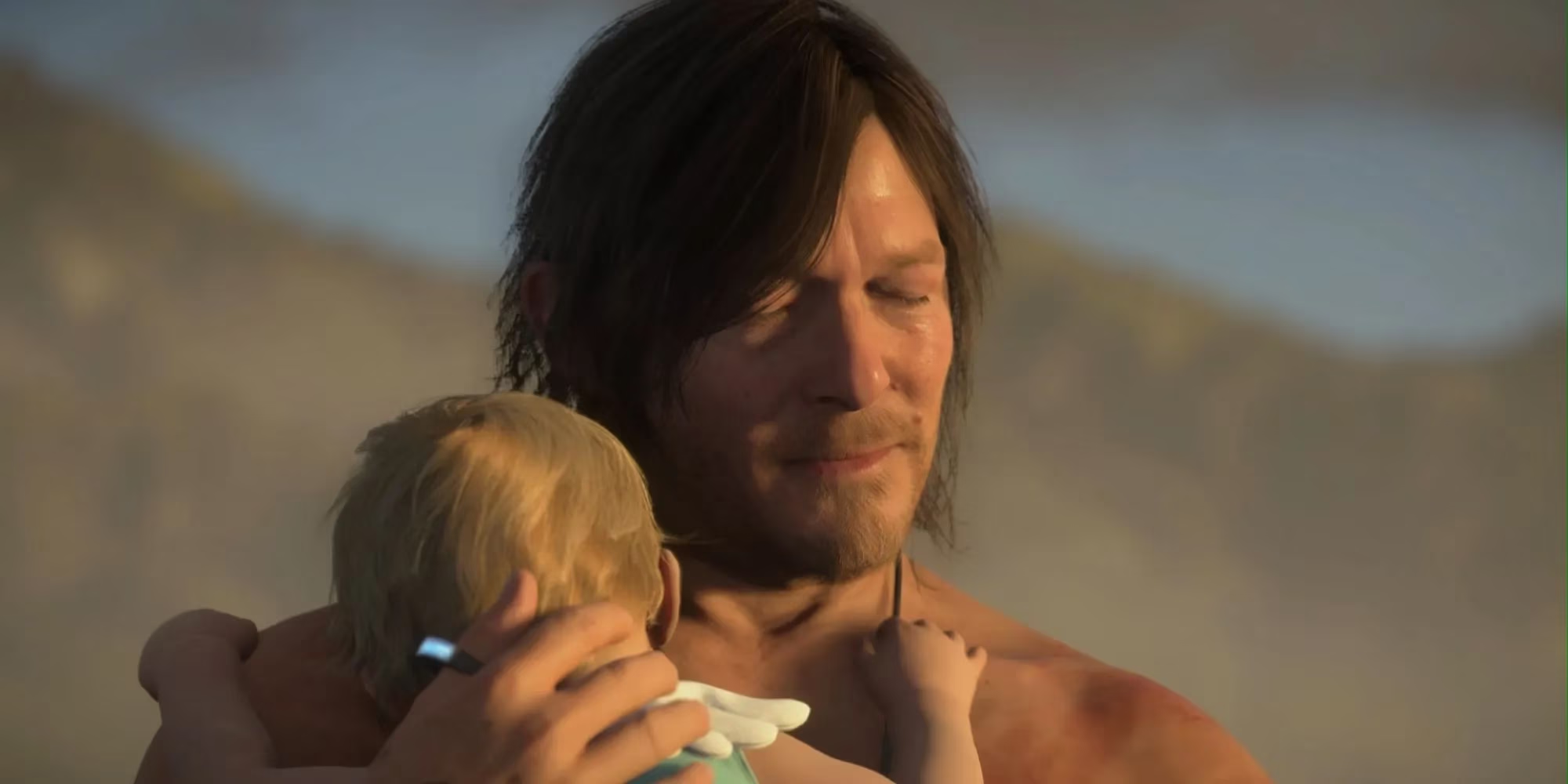
Kojima's central thesis remains laser-focused on humanity's dance with technology—a tango that grew exponentially more complex during the pandemic years. In recent interviews, he dissects our contemporary paradox: while AI-driven algorithms saved societies by enabling remote work and virtual connections during lockdowns, they simultaneously weaponized our attention spans. The game's fictional "Bridge Baby" technology echoes real-world neural networks that now predict desires before we consciously recognize them. Kojima articulates this duality with characteristic nuance:
-
The Savior Complex: "Without internet infrastructure, vaccine research collaboration would've collapsed," he concedes, acknowledging technology's vital role in crisis survival
-
The Manipulator Effect: Personal assistants and content feeds now employ psychological hooks tailored to individual vulnerabilities—"I kind of hate that" Kojima admits about his phone's predictive prompts
-
Connection Degradation: The sequel intensifies its exploration of how digital interfaces flatten emotional resonance, replacing nuanced interaction with transactional notifications
What emerges isn't a Luddite manifesto but a layered examination of intentionality. As Kojima frames it: "Tools aren't inherently corrupt—but hands that wield them might be." This philosophy permeates Death Stranding 2's gameplay mechanics where players must constantly choose between algorithmic efficiency and human improvisation.

The pandemic's most profound casualty, according to Kojima's revised narrative, isn't physical health but something more elusive: coincidence. The sequel positions randomness as an endangered human experience, systematically eradicated by predictive algorithms. Players navigate this through:
| Algorithmic World | Pre-Digital World |
|---|---|
| Curated content bubbles | Unexpected discoveries |
| Efficiency-optimized routes | Meandering exploration |
| Predictive social matches | Chance encounters |
This erosion manifests in what sociologists term "third space annihilation"—the disappearance of communal areas like libraries or parks where unstructured interactions flourished. COVID accelerated this decay, replacing physical gathering points with Zoom grids and Discord servers. Kojima illustrates this through in-game environments where once-bustling community centers now house only holographic ghosts of interaction.
Perhaps the most provocative question embedded in Death Stranding 2 emerges from a simple thought experiment Kojima proposes:
"Calculate your cultural diet—how many films, books, or songs did algorithms decide weren't 'for you'? Now weigh that against treasures discovered through pure accident: the vinyl found in a dusty bin, the novel borrowed on a friend's whim."
This tension between discovery and delegation pulses through the gameplay. Players experience tangible consequences when opting for algorithmic shortcuts versus forging unmarked paths—a mechanic that literally alters the game's weather systems and narrative branches.
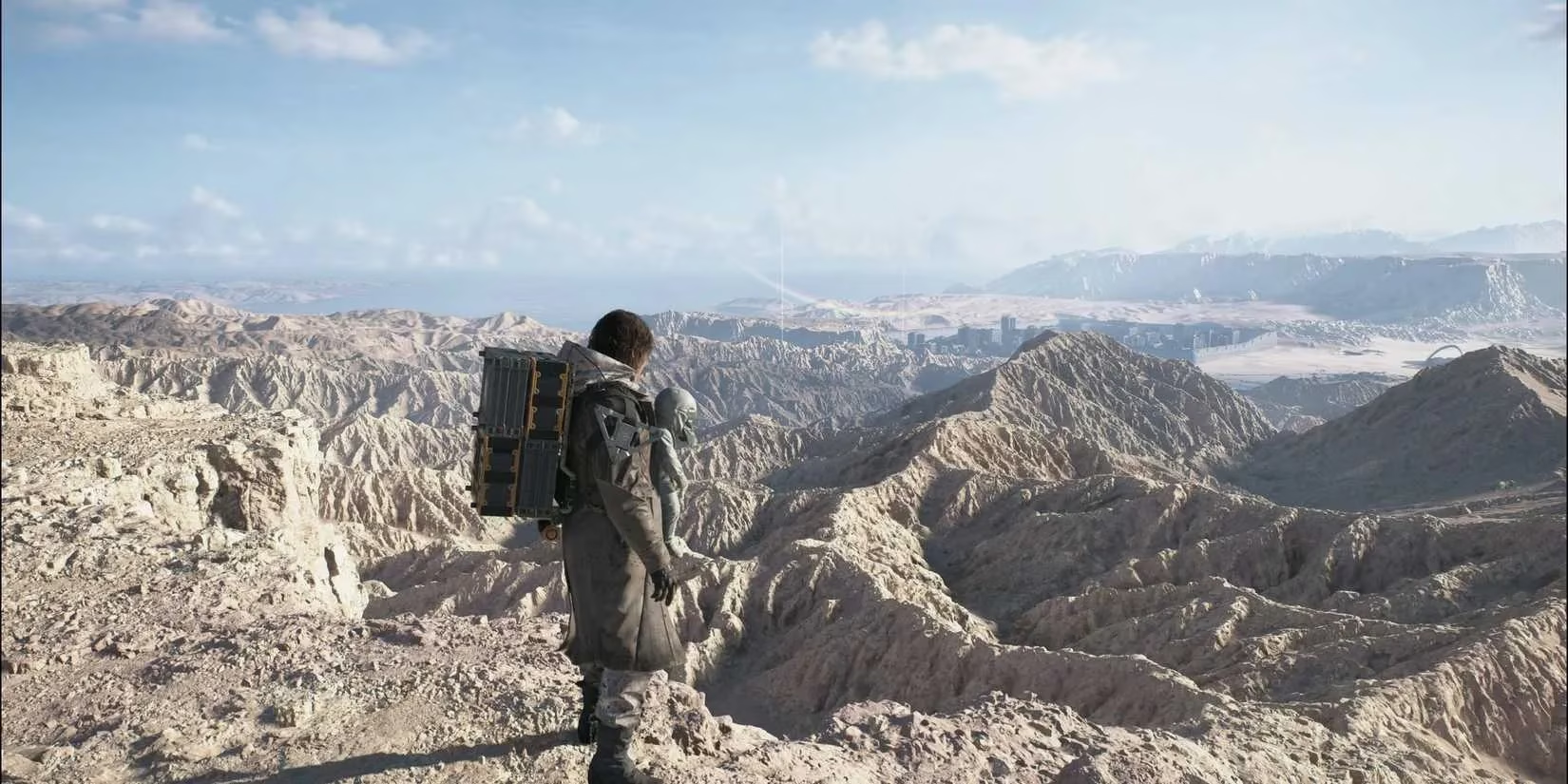
As players traverse the sequel's hauntingly beautiful post-America in 2025, they encounter subtle pandemic echoes: NPCs discussing "The Great Disconnection," cargo missions delivering vaccines to isolated communities, and data chips containing fragmented stories of lockdown loneliness. These aren't exploitative references but anthropological artifacts—Kojima treating our collective trauma as creative raw material.
The game's release timing proves particularly prescient, arriving amidst swirling debates about neural implants and AI-generated relationships. With tech giants promising seamless connection through brain-computer interfaces, Death Stranding 2 asks players to physically labor for every digital interaction—a deliberate friction against frictionless tech promises.
🔍 Core Paradoxes Explored:
-
Connection without presence
-
Safety without spontaneity
-
Prediction without surprise
-
Efficiency without meaning
Six years after the original's uncanny foreshadowing, Kojima refuses to offer easy answers. The sequel concludes not with resolution but with lingering static—a transmission interrupted mid-sentence. As players disconnect their controllers, they're left navigating their own technological tightropes: Can we engineer serendipity? Does awareness of algorithmic manipulation inoculate us against it? And in an age where AI knows us better than we know ourselves, what remains of that beautifully human experience—the accidental discovery?