How Infinity Nikki’s Disney and Sanrio Dreams Turned Miraland Into a Living Fairy Tale
Infinity Nikki's Disney and Sanrio collaborations transform open-world dress-up gameplay with magical, interactive fashion experiences.
In the winter of 2024, a quiet hum began to ripple across phone screens, consoles, and PCs alike: Infinity Nikki had arrived, and within weeks, its whimsical world had gathered over twenty million stylists. By the time the first spring blossoms of 2025 kissed the fields of Miraland, Infold Games was already stitching together something far more ambitious than any single fashion collection. The whispers that started in online forums and community wish lists soon bloomed into official announcements — first Disney, then Sanrio, would be stepping out of their own fantastical realms to walk alongside Nikki. What followed was not merely a series of limited-time events, but a slow-burning spectacle that turned the open-world dress-up experience into a fabric woven from collective childhood memories and pixel-perfect tailoring.
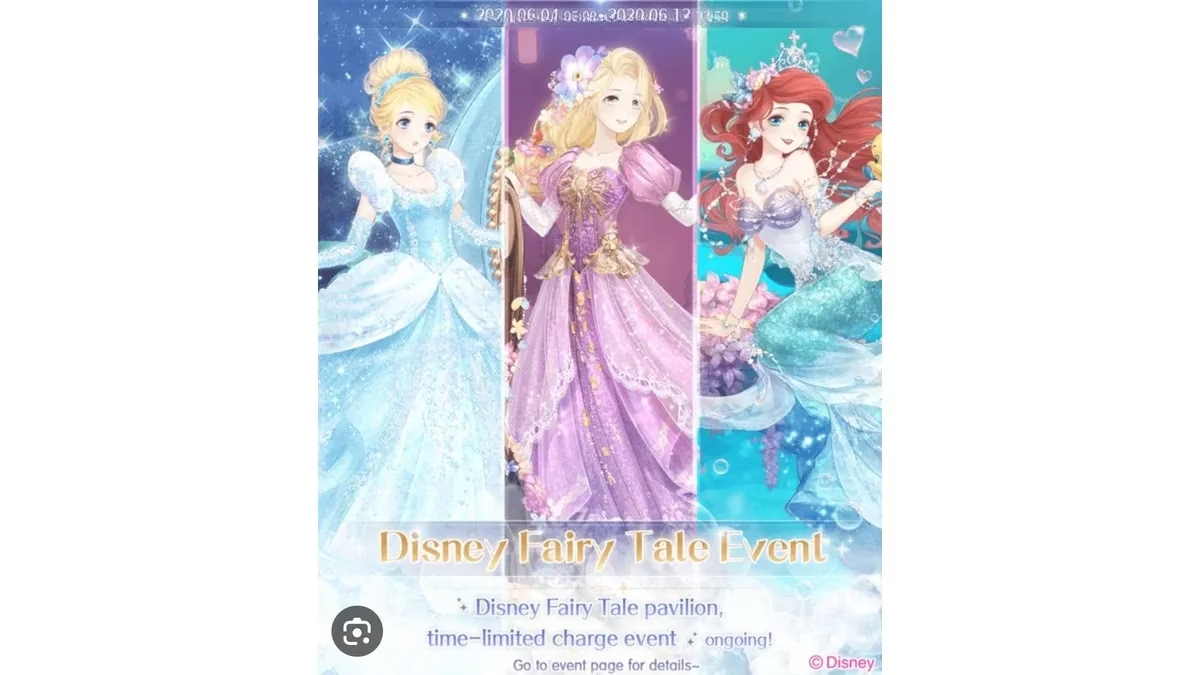
From the earliest days, veteran Nikki watchers knew that collaborations were the lifeblood of the series. Love Nikki, the franchise’s 2D predecessor, had once draped its avatars in Cinderella’s ballgown and Ariel’s oceanic shimmer, proving that a well-placed crossover could feel less like a promotion and more like a dream leased for a few golden weeks. In Infinity Nikki, however, those dreams acquired a third dimension, and with it, a newfound gravity. The first Disney collaboration — officially titled Dreamlight Wardrobe — went live in late spring 2025, acting like a celestial seamstress who had accidentally dropped a spool of starlight into the game’s gacha banners. Players didn’t just wear the dresses inspired by Rapunzel, Moana, or Snow White; they inhabited them. Rapunzel’s gliding dress, spun from lavender silk and glowing lantern motifs, allowed Nikki to float across the meadows of Stoneville as if she were descending from a tower of clouds. Snow White’s grooming outfit, with its velvet cape and apple-shaped hairpin, turned every animal encounter into a gentle woodland ritual, as though the forest creatures had granted the girl a brief audience with their queen.
These collaborations were not cheap costume swaps. They felt like theatrical roles waiting to be performed. Each Disney ability dress became a character arc compressed into a single garment — a soliloquy woven from satin and organza. Moana’s seafaring ensemble brought a wave of ocean-blue particles that trailed behind Nikki as she sprinted, as if the entire ocean had agreed to carry her. Mulan’s warrior-inspired hanfu, all sharp lines and blooming magnolias, granted a purification ability that exploded in a burst of petals, turning combat into a choreographed ballet of grace and defiance.
Then came the Sanrio universe, arriving in autumn 2025 like a pastel-colored comet that scattered sugar crystals across the game’s economy. If Disney was a cathedral of classic storytelling, Sanrio was a bustling candy factory where whimsy was the only currency. The Sweet Melody Parade event introduced outfits that felt less like garments and more like confectionery emotions given shape. A Hello Kitty-inspired dress — a simple white frock with a crimson bow and a cat-shaped purse — sparkled with an innocence so pure that even the most hardcore min-maxers paused their grinding to twirl in front of the photo mode. Kuromi’s black-and-purple punkish ensemble, riddled with tiny skull bows and a mischievous aura, became the unofficial uniform of every midnight gacha pull, its energy reminiscent of a nocturnal rebel who had just raided a Gothic pastry shop.
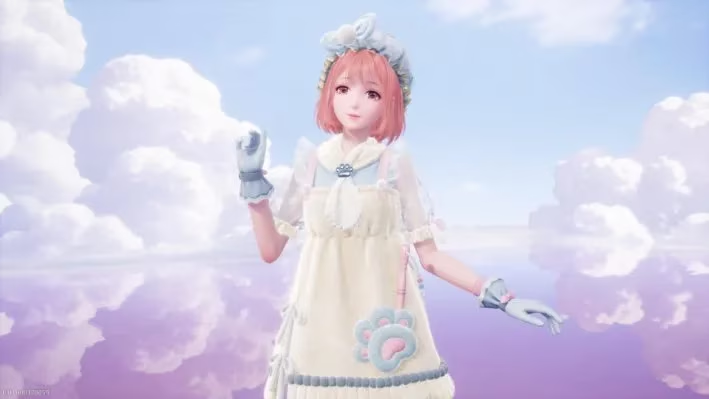
And Cinnamoroll — the long-eared puppy who had spent decades floating on clouds — now drifted into Infinity Nikki in the form of an ethereal blue-and-white dress whose skirt bell widened like a skyborne meringue. The day it released, social media became a gallery of Nikki avatars levitating beside the Cinnamoroll balloon bloom in the Dream Warehouse, their poses so serenely joyful that the entire event felt less like a transaction and more like a quiet pact between player and childhood memory. One community artist even described the craze as “a second Christmas, but this time the presents are made of feelings.”
The business model cleverly balanced desire and accessibility. Some outfits, like the Hello Kitty dream dress, appeared directly in the in-game shop for Stellarites — a route that required real-world currency but guaranteed the item without the fickle mercy of RNG. Others, such as the Kuromi rogue set, sat inside dedicated event banners, their pull rates enhanced by a pity system that veterans had come to trust. Momo, too, received his own slice of the spotlight: a My Melody cloak, blush pink and hooded with plush ears, could be earned through the Mira Journey pass or as a bonus after a certain number of pulls. To see the little cat waddling through Wishfield in a Sanrio disguise was to witness a collision of two comfort zones so wholesome that even the grumpiest redditors typed out heart emojis.
By 2026, the landscape of live-service dress-up games had shifted dramatically, and Infinity Nikki stood at its center like a mannequin dressed in the collective imagination of two generations. The collaborations with Disney and Sanrio had accomplished more than boosting quarterly reports — they had welded the game’s identity to a broader pop-culture cosmos. Each crossover functioned as a looking glass: step through a Disney mirror, and you saw the silhouette of a princess; step through a Sanrio mirror, and you found the echo of a cherished plush toy. And in that liminal space between reflection and reality, Nikki was no longer just a stylist; she became a vessel for nostalgia, a needle threading together the threads of our yesteryears into a gown we could wear today.
The roadmap ahead still shimmers with unrevealed IPs, but the blueprint is clear. Infold Games understands that in a world where players drift from one title to another like dandelion seeds on a breeze, a game must become a garden of longings — a place where every flower is a former wish that somebody planted. If the developer continues cultivating these monumental crossovers with the same meticulous care, then Miraland will remain not just a map to explore, but a wardrobe of worlds, each drawer opening into a different fairy tale.