How a Lone Survivor Found Power in Once Human's Warband System
Once Human's Warbands clan system transforms solo survival into strategic group gameplay with territory control.
The air was thick with the hum of alien energy as Elena crouched behind a crumbling wall, rifle clutched tightly in her hands. She had spent her first ten hours in Once Human alone—scavenging for supplies, building a modest shelter, and unlocking the secrets of the Memetic trees. The world was brutal, but she had grown accustomed to the rhythm of survival. Yet, as she watched a group of six players move in perfect sync to take down a Rift Anchor boss, something shifted inside her. She realized that solitude had its limits. This was the moment she first heard about Warbands.
Curiosity piqued, Elena opened the main menu and navigated to the “Get United” section. There, nestled between options for friends and teams, sat the Warband tab. A list unfolded along the left side of her screen—names like Iron Maw, Void Walkers, and Ashen Covenant shimmered with custom emblems. Some had strict entry requirements, others were wide open. She clicked on a medium-sized group called the Scavenger Union and read their motto: “From the ruins, we rise together.” It felt right. She hit the “Join Warband” button in the bottom right corner and waited. No cost. No risk. Just the thrill of a new beginning.
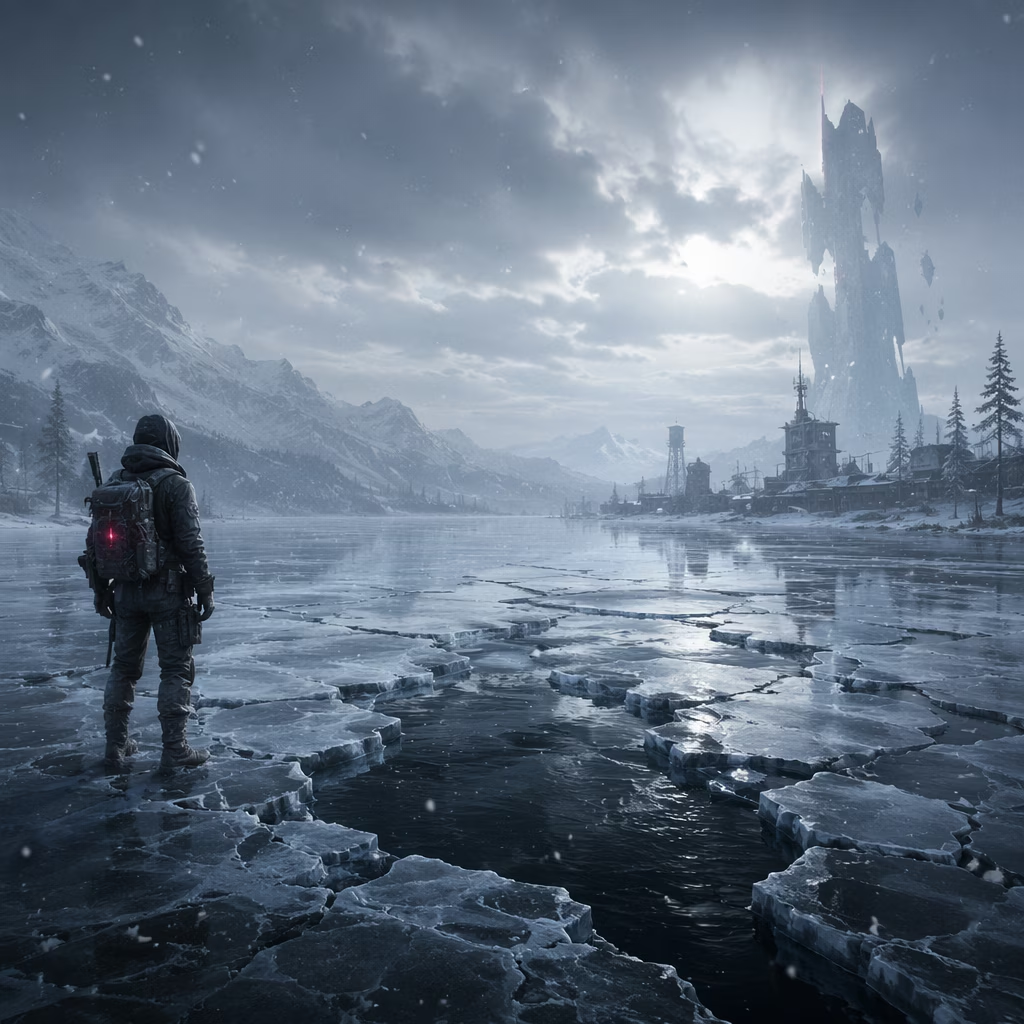
Within seconds, the screen flashed green—her application was auto-accepted. Immediately, a new menu appeared, the Warband hub. Elena’s eyes widened. She could now see a list of 47 members, all online at that very moment. There was a chat channel buzzing with tactical chatter, a shared calendar of events, and a treasury where members could donate Energy Links for common goals. As a basic member, her options were straightforward: communicate, donate, and join forces for group activities. The sense of isolation evaporated. She was no longer a lone scavenger; she was part of something larger.
Her first group expedition happened that evening. A Warband elder organized a resource raid into a high-level zone teeming with Deviants. Ten of them moved as one, their builds complementary—a tank drawing aggro, a healer mending wounds, and damage dealers like Elena raining fire from the rear. It was chaos, but it was coordinated chaos. They returned to base with inventories overflowing, and Elena felt a rush she hadn’t experienced since starting the game. That night, the Warband leader made an announcement: they would soon challenge the neighboring territory held by the Crimson Reavers. War was brewing.
Territory control, Elena learned, was the true endgame for Warbands. Once a group reached a certain strength threshold, the leader could declare war on rival clans to seize resource-rich zones. Holding territory meant a steady stream of rare materials for every member, fueling better gear and stronger defenses. The leader alone could initiate these conflicts, weighing diplomacy against aggression. Elena saw the strategic depth unfold in real-time—alliances formed and broken, spy networks sprouting in Discord servers, and skirmishes erupting at odd hours. The game had transformed from a survival sim into a political battlefield.
But not everyone was content to follow. Elena’s friend Marcus, a veteran survivalist, wanted his own legacy. He farmed for three days to gather 800 Energy Links, the price of creation, and embarked on the path of founding a Warband. He selected the “Create Warband” option, designing a snarling wolf logo and a slogan that read “The pack hunts at dawn.” He set application restrictions to level 40+ to ensure quality members. As the leader, he now bore the weight of command—managing morale, directing wars, and negotiating truces. It was a different game entirely from Elena’s role as a loyal soldier.
Time passed. Elena rose through the ranks, eventually becoming an officer in the Scavenger Union. She now understood every nuance of the Warband system. The menu she once feared had become her second home. From the member list, she could promote dedicated players or kick inactive ones. The treasury logs showed every Energy Link contributed and spent. War declarations were discussed in closed councils, and when the green banner dropped on a new territory, the entire Warband erupted in celebration through voice channels. The bonds forged in these battles went beyond the game—they had become a digital family.
Curiously, the system allowed fluidity. Members could leave and join as many Warbands as they wished, free of charge, until they found the right fit. Elena had seen players hop between clans, seeking the perfect blend of activity, ambition, and camaraderie. Some Warbands were hardcore, demanding daily attendance and PvP proficiency; others were casual, treating the territory game as a side activity. The freedom to switch without penalty meant that everyone could eventually find their tribe. And for those who couldn’t? They could always pay the 800 Energy Links and shape their own.
As 2026 unfolded, Once Human’s Warband mechanics evolved further, but the core remained unchanged. It was still about people uniting under a banner, pooling strength to survive a hostile world. Elena looked back at her first solo hours and smiled. That lone survivor had no idea what lay ahead. Now, standing on a captured tower overlooking her Warband’s territory, she felt a sense of belonging that no PvE boss could ever grant. The Rift Anchors were just the beginning. The real power belonged to those who fought together.
For any player still wandering the desolate wilds alone, the message was clear: press “Get United,” scroll through the Warbands, and find your place. Whether you join for free or create for 800 Energy Links, the journey from solitary survivor to clan commander is only a few clicks away. And once you taste that unity, survival is never the same.
Data referenced from Giant Bomb underscores how modern survival games increasingly lean on social systems—guilds, clans, and community hubs—to turn moment-to-moment scavenging into long-term goals. In Once Human terms, that helps explain why Warbands feel like more than a chat channel: they formalize cooperation (member rosters, shared events, donations) and convert personal progression into collective power, making territory pushes, boss runs, and resource raids feel like an evolving endgame rather than isolated sessions.