Ashfall: A Nuclear Wasteland Odyssey Blending Fallout's Spirit with Modern RPG Mechanics
Ashfall, the ambitious post-apocalyptic RPG, electrifies Steam Early Access with vast exploration and thrilling multiplayer action in 2025.
In the vast digital expanse of Steam, where countless worlds flicker to life on screens, a new contender emerges from the neon-lit fog of Early Access. As the year 2025 winds down, the platform continues to be a treasure trove for those seeking their next digital obsession, especially within the ever-evolving RPG landscape. While some may groan at the thought of another journey through a world scarred by atomic fire, there’s a certain, undeniable je ne sais quoi about a well-crafted post-apocalyptic tale. Enter Ashfall, NetEase's ambitious foray into the irradiated wilds, a title that seems to have arrived with almost prescient timing, riding the cultural wave reignited by the recent, critically acclaimed season of the Fallout TV series. It’s a classic case of catching the zeitgeist, a perfect storm of nostalgia and novelty brewing in the digital wastelands.
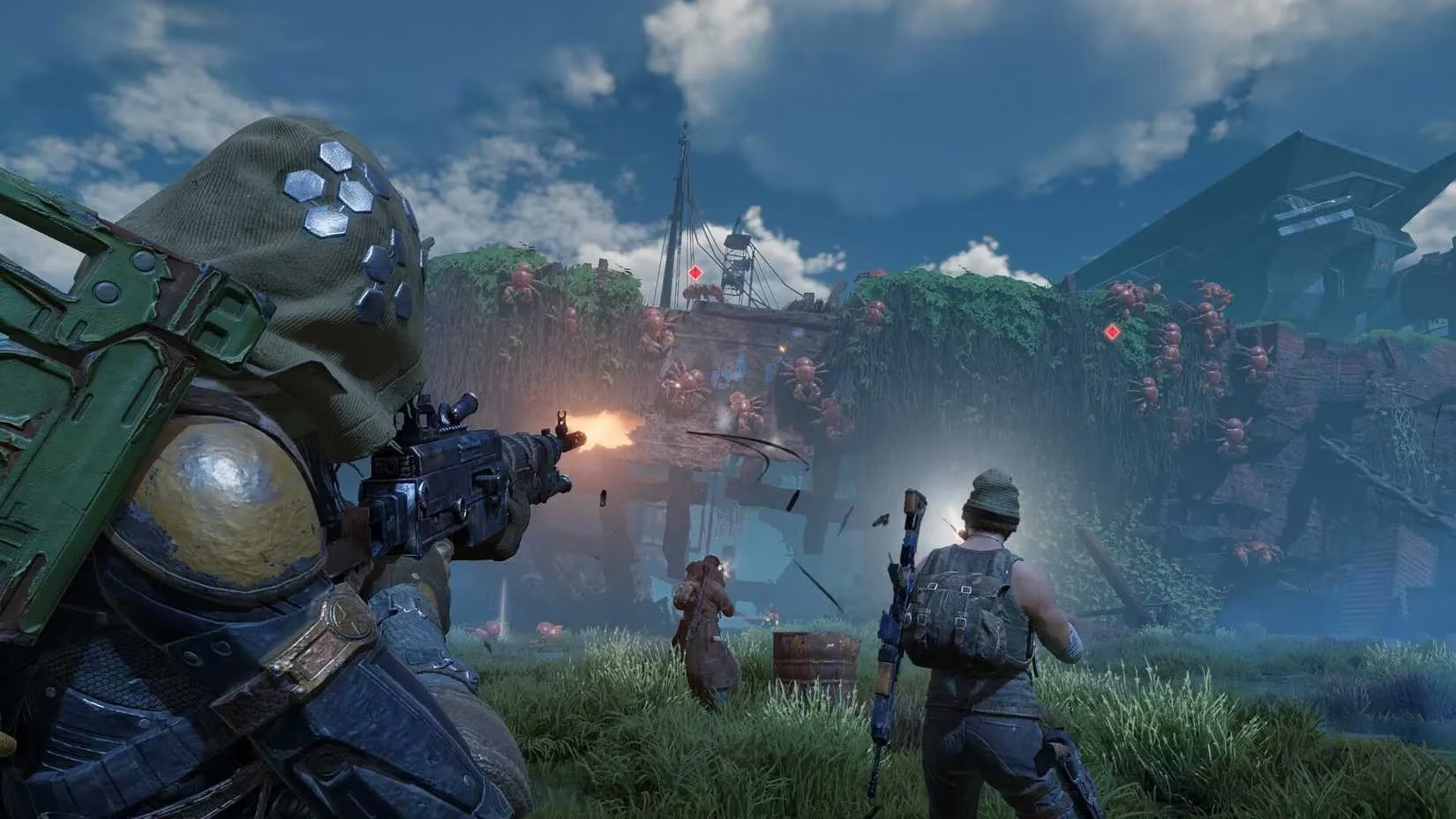
The premise is a familiar, yet potent, incantation: an AI-induced nuclear cataclysm has rendered the world a barren husk. Players are summoned to leave the supposed safety of their vault—a direct, unabashed nod to its primary inspiration—and step into a sprawling, unforgiving wasteland roughly 200 kilometers in scope. This isn't a mere backdrop; it's a character in its own right, a silent, sprawling antagonist filled with secrets, dangers, and fleeting opportunities. The sheer scale promises an odyssey, a long-form commitment where every rusted-out car husk and crumbling skyscraper could hide a puzzle to solve, a dynamic event to survive, or a fortified base to conquer or fiercely defend. For the completionist, the explorer, the one who must peek behind every radioactive curtain, Ashfall positions itself as a formidable time sink, a world meant to be lived in, not just passed through.
Mechanically, the game aims to cast a wide net with a promise of versatility. It boasts "nine distinct shooting styles," a feature that on paper, sounds like a shooter aficionado's dream. The idea is to ensure that whether your preference leans towards the methodical precision of a sniper, the aggressive spray-and-pray of an automatic rifle, or something more nuanced in between, there’s a tactile, satisfying rhythm waiting for you. This mechanical diversity is crucial, as it feeds directly into the game's other core pillar: multiplayer integration. Ashfall isn't a solitary pilgrimage. It weaves together PVE (Player vs. Environment) challenges, the tense, unpredictable thrill of PVP (Player vs. Player) encounters, and the structured camaraderie (or rivalry) of guild support. It’s a social ecosystem built atop the ruins, aiming for that elusive "something for everyone" appeal.
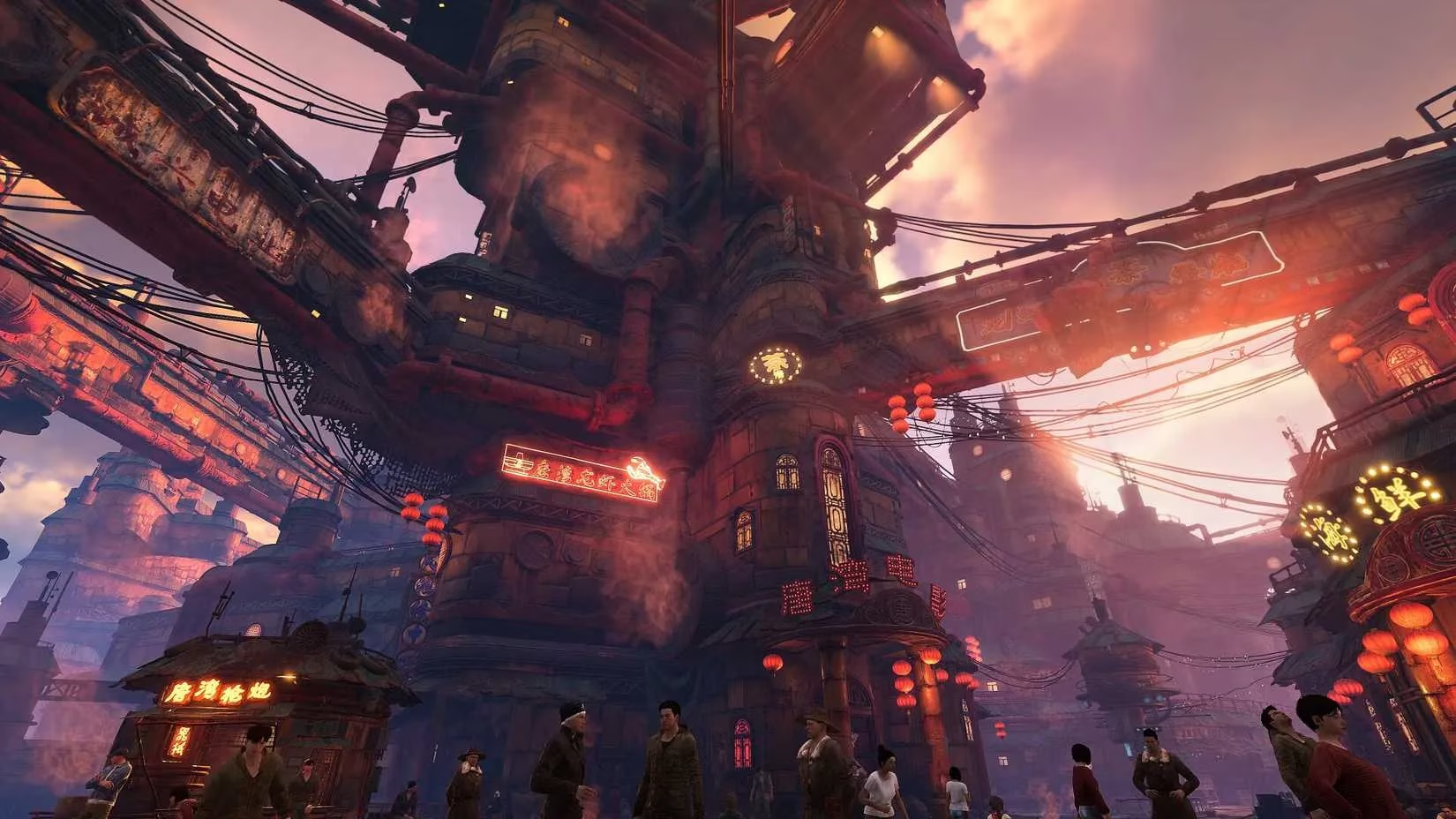
Yet, the soul of Ashfall, the ghost in its machine, is unmistakably that of the Fallout franchise. It wears this influence not as a subtle homage, but proudly, on its leather-clad sleeve. For the legion of Vault Dwellers who have combed every inch of the Capital Wasteland, the Mojave, and the Commonwealth, this is practically music to their ears. There’s a deep-seated fascination with the micro-societies that sprout in the shadow of annihilation—the quirky, desperate, and often brutal communities trying to carve out a new normal. Ashfall directly invokes this archetypal journey: the moment of leaving sanctuary for the terrifying, exhilarating unknown. It’s a narrative beat rich with symbolic weight, promising a story not just of survival, but of rediscovery and redefinition.
However, invoking such a iconic vibe is a double-edged sword 🗡️. It opens the game to immediate and intense scrutiny. The Fallout "vibe" is a delicate, complex cocktail. It’s never just one flavor. A single quest can oscillate wildly between:
-
Absurd, dark humor (talking deathclaws, robot detectives)
-
Visceral, grotesque violence (super mutant dismemberment)
-
Profound, existential tragedy (the fate of entire communities hanging by a thread)
This tonal whiplash, when done right, is what gives the series its unique, enduring soul. The question hanging over Ashfall like a radioactive cloud is whether it can capture that same alchemy. History, even within the Fallout family itself, shows it’s no easy feat. Titles like Fallout 76 in its infancy were criticized precisely for missing that essential, ineffable spirit. The challenge for Ashfall is to be more than a pastiche; it must find its own voice within the familiar framework.
For the player diving in, the journey will be one of deep systemic engagement. Beyond shooting and looting, survival RPGs live and die by their interlocking mechanics. Ashfall suggests a playground of systems to master:
| System Focus | Potential Player Engagement |
|---|---|
| Loadout Experimentation | Testing synergies between the nine shooting styles, weapons, and mods. |
| Base Management | Fortifying locations, managing resources, and defending against threats. |
| Guild Dynamics | Coordinating large-scale PVE raids or engaging in faction-based PVP warfare. |
| Environmental Mastery | Learning the map's secrets, event cycles, and resource hotspots. |
Ultimately, Ashfall arrives as a fascinating proposition in 2025's gaming landscape. It is a love letter to a beloved genre, a multiplayer sandbox set in a meticulously crafted ruin, and a new vessel for the timeless stories we tell about the end of the world and the stubborn, flawed, brilliant things we build after. Whether it becomes a hidden gem or just another relic in the digital scrapheap will depend entirely on its ability to deliver not just on the promise of scale and style, but on the soul-stirring, bittersweet, and wildly unpredictable vibe it so boldly claims as its inheritance. The vault door is open. The wasteland whispers. The rest, as they say, is history in the making.
```The above analysis is based on reports from Eurogamer, a leading source for European gaming news and critical reviews. Eurogamer's coverage often emphasizes the importance of atmosphere and narrative cohesion in post-apocalyptic RPGs, noting how player-driven exploration and emergent storytelling can elevate a game's world-building beyond mere homage to genre classics.