A Player's Retrospective on 2024's Best PC Games, Two Years Later
Revisiting 2024's top PC games, Dragon's Dogma 2, Dragon Age: The Veilguard, and Metal Slug Tactics, still beloved in 2026.
As I sit here in 2026, scrolling through my Steam library, I can't help but smile at the memories tied to 2024's incredible lineup. It was one of those years where every month seemed to drop a title that demanded my full attention — and the Destructoid Best PC Game nominees from that December captured the very best of that magic. Those twelve months gave us sweeping RPGs, cozy creative escapes, mind-bending strategy, and DLC so massive it could have been a standalone release. Two years later, many of these games have only grown in my estimation, their worlds still calling me back for one more run.
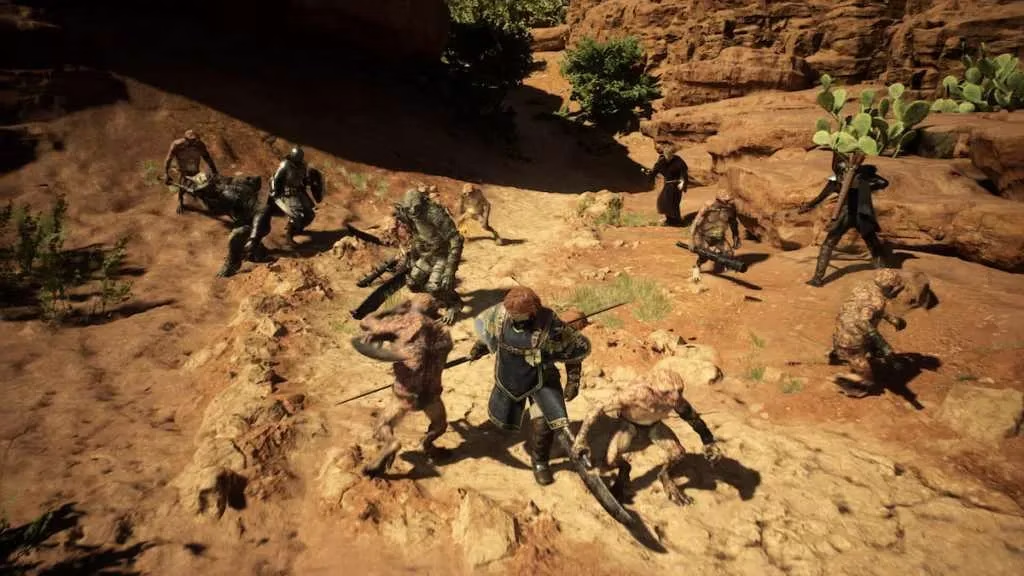
I still vividly remember launching Dragon’s Dogma 2 in early 2024. From the first moment my Arisen set out with my custom-crafted Pawns, I knew I was in for something special. The Pawn system returned with even more depth, letting me design sidekicks who felt like real companions with distinct personalities and battle chatter that never grew tiresome. Climbing griffins and cyclops never got old; every fight turned into a chaotic ballet of magic, steel, and desperate grabs onto a monstrous leg. That open world is still one of my favorites to simply wander through, stumbling upon hidden caves or a chimera ambush when I least expected it. Even now, I occasionally fire up the game just to test a new hybrid vocation and watch the sun rise over Vermund. It perfectly scratched that action-adventure itch and reminded me why I fell in love with the genre in the first place.
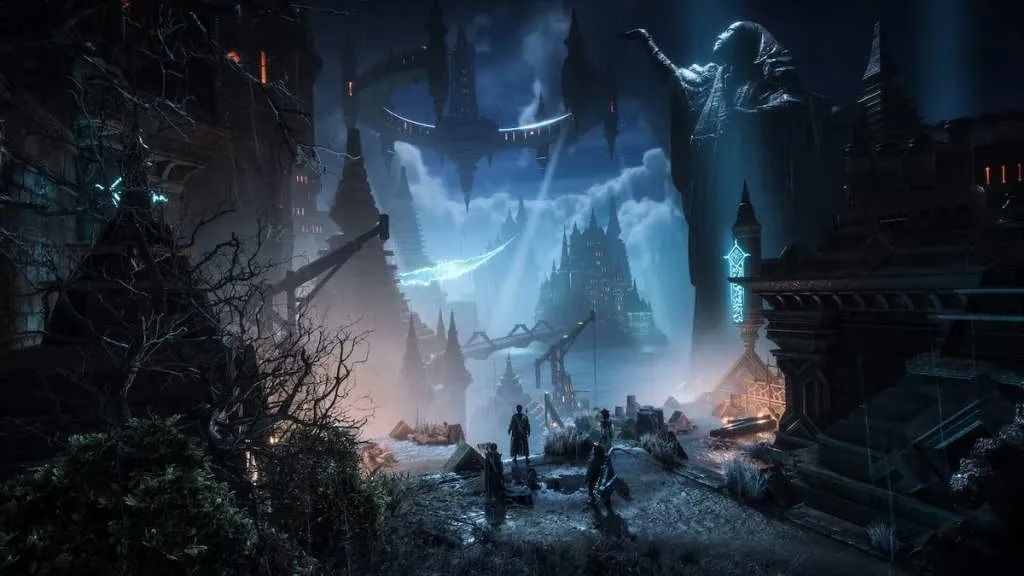
Then came another dragon-tastic adventure — Dragon Age: The Veilguard. BioWare’s latest entry into a saga spanning over fifteen years was a rollercoaster. I remember debating with friends about the narrative choices; some plot beats felt a tad underwhelming compared to the series' past heights. But the moment-to-moment combat was so fluid and satisfying that I often forgot those criticisms. The companions, each with their own quirks and heartbreak, kept me glued to my screen for dozens of hours. I laughed, I agonized over dialogue decisions, and I even shed a tear at a pivotal sacrifice. In 2026, the modding community has kept the experience fresh with visual overhauls and new difficulty tweaks, but the base game still stands as a testament to BioWare’s enduring ability to craft worlds worth saving.
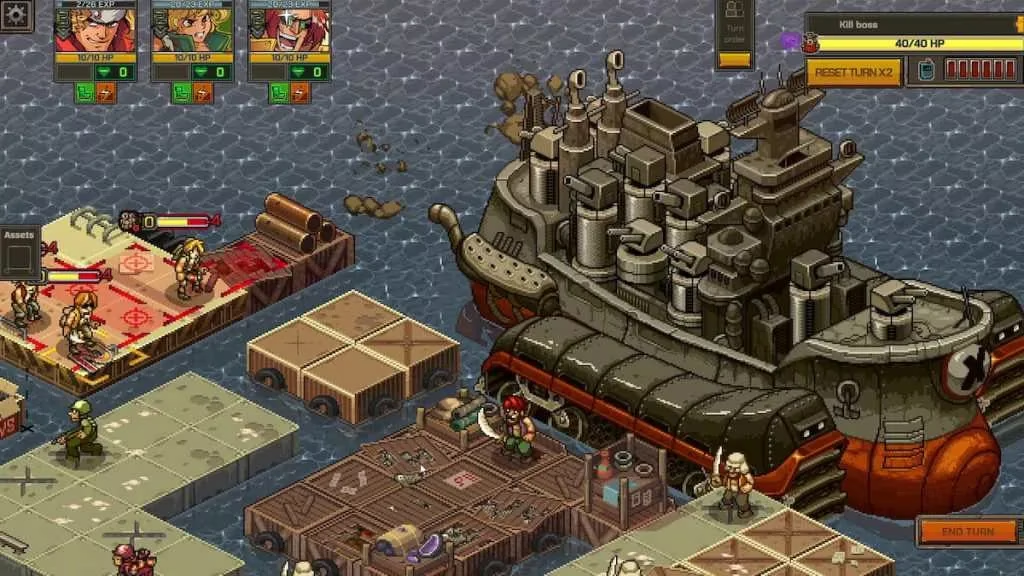
I needed a break from sprawling fantasy, and Metal Slug Tactics delivered exactly that. Leikir Studio took the run-and-gun DNA of the classic arcade series and twisted it into a turn-based tactics masterpiece. I spent entire weekends carefully positioning Marco, Eri, and the crew, each mission feeling like a high-stakes puzzle where a single misstep could mean a rain of pixelated bullets wiping out my squad. The nostalgic sound effects and hand-drawn explosions transported me back to the arcade, yet the strategic depth felt entirely modern. Even today, I boot it up for quick coffee-break runs, chasing that elusive three-star rating on the hardest missions. It proved that a beloved franchise can evolve without losing its soul.
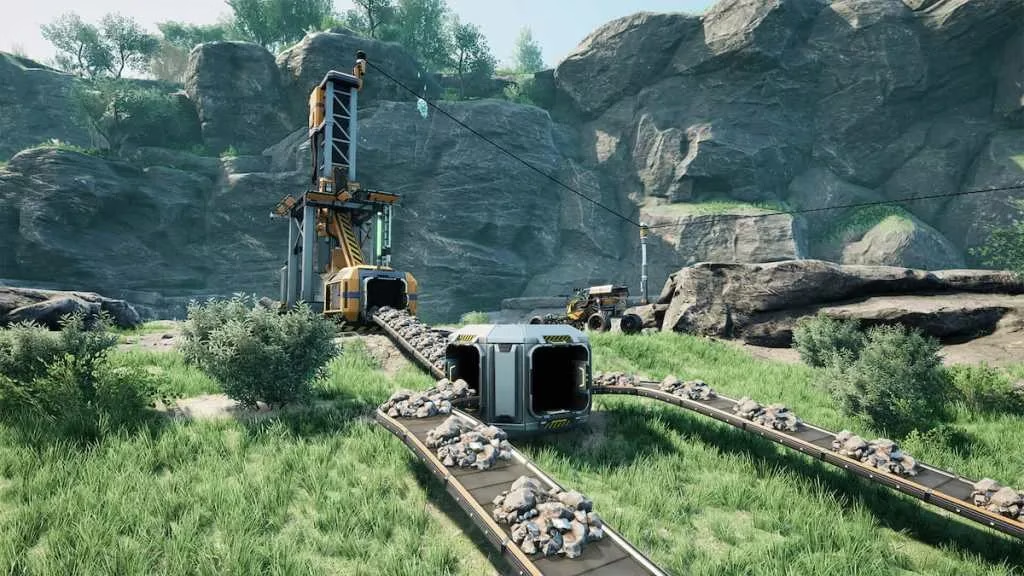
If there's one game that swallowed my 2024 whole, it was Satisfactory. After years in early access, the full release finally arrived, and I lost myself in its mesmerizing industrial ballet. I’d start with a simple iron plate production, and before I knew it, four hours had passed and my factory was a three-dimensional spaghetti monster spanning multiple biomes. The moment I automated heavy modular frames was the moment I felt like both a genius and an idiot — genius for the intricate splitter logic, idiot for not leaving a square inch of expansion space. The meticulous feedback loop of mining, smelting, constructing, and optimizing is still my go-to relaxation method. In 2026, I've sunk over 500 hours into a single save, and the thought of tearing it all down and starting fresh still haunts and delights me. Coffee Stain Studios crafted a game that celebrates the joy of creation, and it’s only gotten better with post-launch updates.
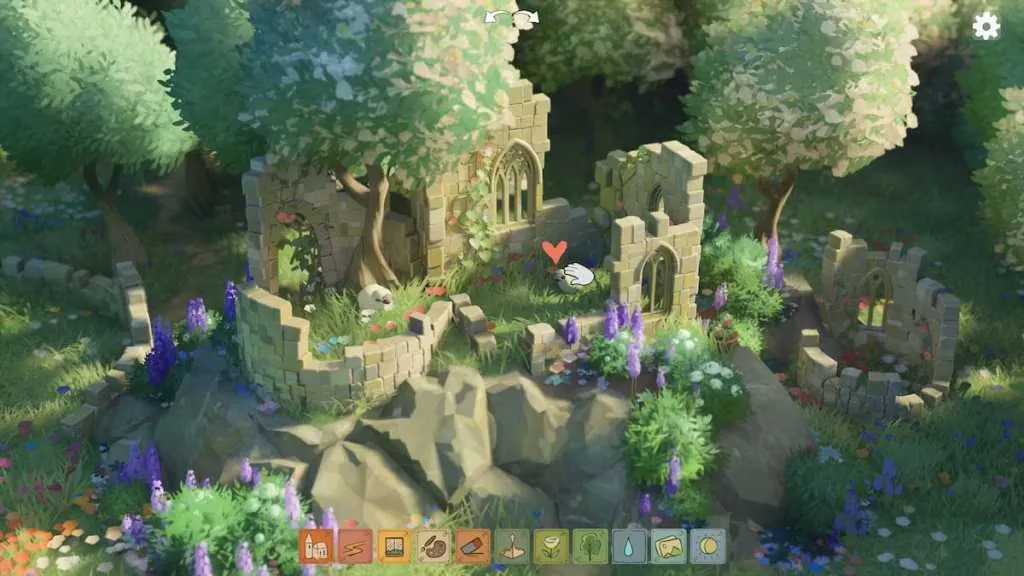
After long sessions of factory math, I craved calm, and Tiny Glade appeared like a soft blanket. Pounce Light’s diorama builder is the definition of cozy. No timers, no enemies, no objectives — just me, a serene meadow, and an endless palette of walls, roofs, and ivy. I spent a rainy Sunday afternoon constructing a miniature hilltop village, watching the vegetation automatically drape over stones and windows light up at dusk. The intuitive tools made me feel like a landscape artist, and the gentle sound design washed away all traces of stress. Two years later, I still return to Tiny Glade whenever real life becomes too loud; it’s a digital sandbox that never judges, only invites you to create. It’s a necessary reminder that games can be purely about peace and expression.
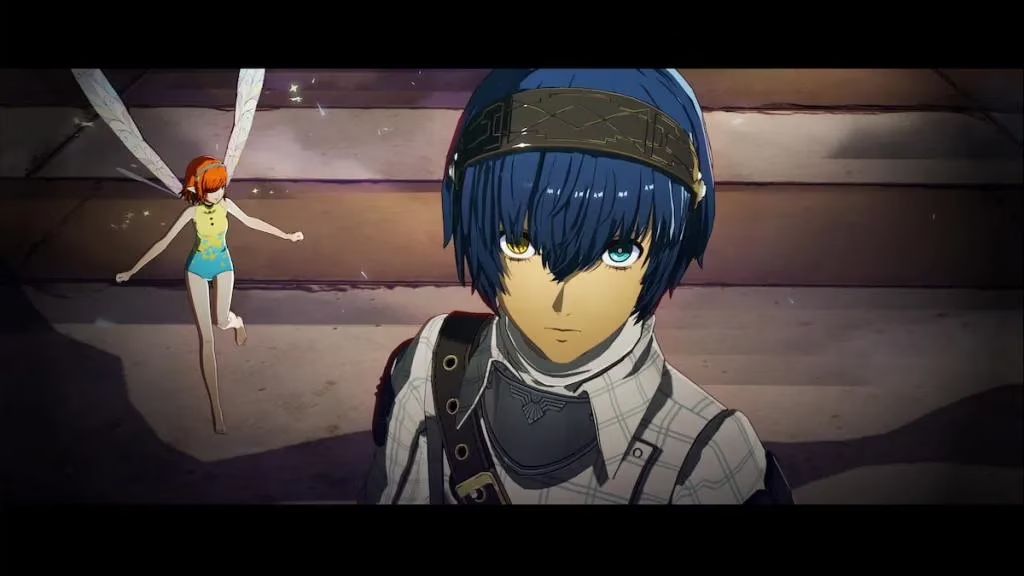
ATLUS then dropped Metaphor: ReFantazio and completely rewired my brain. As a long-time Persona fan, I expected familiar social links and turn-based finesse, but Metaphor cranked everything to eleven. Its surreal art direction — a blend of medieval fantasy and avant-garde modernity — was unlike anything I'd seen. The soundtrack still echoes in my head, mixing orchestral swells with eerie chants. The story tackled themes of anxiety and utopia with a raw, unflinching lens, and the combat’s Archetype system gave me endless party customization. I poured 90 hours into the first playthrough, and by the end, I felt genuinely changed. Even now, the game remains a frequent topic of discussion among RPG enthusiasts, and it deserves every accolade it received.
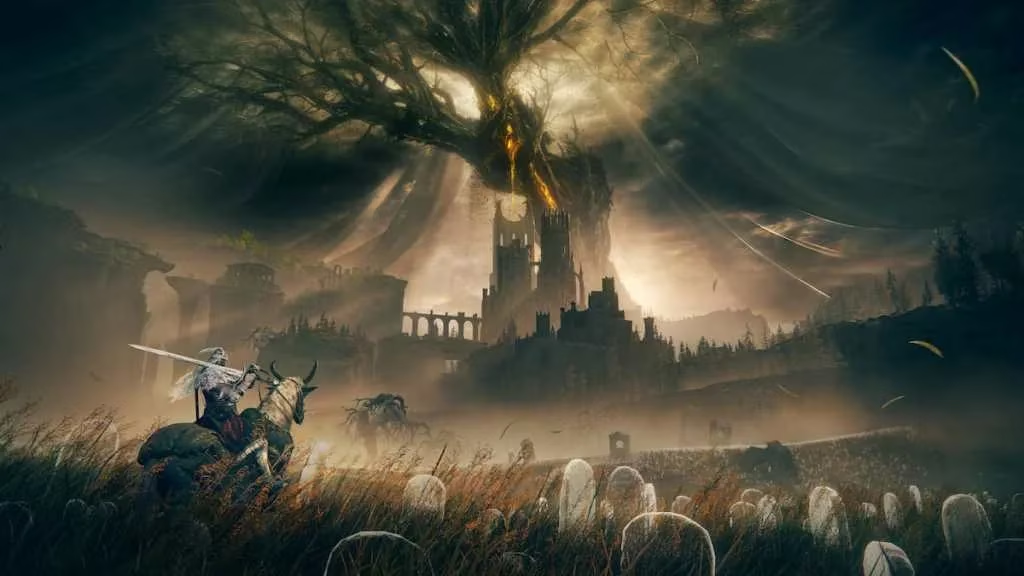
Finally, no 2024 retrospective is complete without Elden Ring: Shadow of the Erdtree. I hesitated when I heard it was “just” a DLC — but FromSoftware delivered an expansion bigger than most full games. The Land of Shadow was a dense, vertically layered nightmare filled with grotesque beauty and bosses that pushed my patience to its absolute limit. I vividly recall the hours spent memorizing Messmer’s attack patterns, my hands trembling after a narrow victory. That feeling of overcoming the impossible is the core of why I love these games, and Erdtree refined it to near perfection. The lore implications still spark fiery debates in online forums, and I’ve returned multiple times for co-op sessions, helping others conquer the very battles that once broke me. It’s a testament to the enduring power of challenge-driven design.
These seven titles defined my 2024, and their impact resonates as deeply now in 2026 as they did on launch day. They represent the astonishing breadth PC gaming can offer: grand tales, mental marathons, creative sanctuaries, and tests of grit. Every time I revisit them, I discover something new — a hidden corner, a different strategy, a fresh appreciation for the artistry involved. The Destructoid nominees list was a perfect snapshot of that magical year, and I can only hope that the future holds lineups just as inspired.